Author Archives: mahemuestate

Dr Akinwumi Adesina named 2017 World Food Prize winner

Dr Akinwumi Adesina previously served as Nigeria’s agriculture minister from 2011 to 2015.
Photo: Eric Roset / Africa Progress Panel

Adesina received the prize, which gives recognition to individuals who have advanced human development by improving the quality, quantity or availability of food, at a ceremony at the US Department of Agriculture in Washington on 26 June.

According to a statement by the WFP Foundation, Adesini had played a leading role in human development over the last two decades.

He had significantly expanded food production in Nigeria and introduced initiatives to give smallholder farmers across the continent access to credit, as well as “galvanizing the political will to transform African agriculture”.

Adesina, who served as Nigeria’s agriculture minister from 2011 to 2015, said his life mission was to uplift millions of people out of poverty, especially farmers in rural areas of Africa.

“As someone who grew out of poverty, I know that poverty is not pretty,” he said.

Adesina also previously served as associate director for food security at the Rockefeller Foundation and was later vice-president of Policy and Partnerships at the Alliance for a Green Revolution in Africa (AGRA).

While minister of agriculture in Nigeria, Adesina introduced an e-wallet system that was instrumental in rooting out fertiliser distribution corruption.

The foundation said that his policies had expanded Nigeria’s food production by 21 million tons, and the country had attracted US$5,6 billion (R73 billion) in private sector investment in agriculture, earning Adesina the reputation of being “the farmer’s minister”.

WFP Foundation president Kenneth Quinn said that Adesina’s selection as 2017 winner reflected both his ministerial achievements and the role he had played in the development of AGRA.

“It also gives further impetus to his profound vision for enhancing nutrition, uplifting smallholder farmers, and inspiring the next generation of Africans as they confront the challenges of the 21st century,” he said.

According to the ADB, Adesina had also recently received the 2017 Gene White Lifetime Achievement Award for Child Nutrition, been one of 17  global leaders appointed by UN Secretary General Ban Ki-moon in 2010 to spearhead the Millennium Development Goals, and been named Person of the Year by Forbes Africa magazine in 2013.

In addition, he had featured among the 100 most reputable persons in the world in a list released by SA-based Reputation Poll early this month.

Adesina is scheduled to receive the $250 000 (R3,2 million) WFP award in a ceremony in the US in October.

He said it was important to give hope, and turn agriculture into a business all across Africa to create wealth for African economies. “The World Food Prize gives me an even greater global platform to make that future happens much faster for Africa,” he said.

Visit www.worldfoodprize.org for more information.

Dr Akinwumi Adesina named 2017 World Food Prize winner

Dr Akinwumi Adesina previously served as Nigeria’s agriculture minister from 2011 to 2015.
Photo: Eric Roset / Africa Progress Panel

Adesina received the prize, which gives recognition to individuals who have advanced human development by improving the quality, quantity or availability of food, at a ceremony at the US Department of Agriculture in Washington on 26 June.

According to a statement by the WFP Foundation, Adesini had played a leading role in human development over the last two decades.

He had significantly expanded food production in Nigeria and introduced initiatives to give smallholder farmers across the continent access to credit, as well as “galvanizing the political will to transform African agriculture”.

Adesina, who served as Nigeria’s agriculture minister from 2011 to 2015, said his life mission was to uplift millions of people out of poverty, especially farmers in rural areas of Africa.

“As someone who grew out of poverty, I know that poverty is not pretty,” he said.

Adesina also previously served as associate director for food security at the Rockefeller Foundation and was later vice-president of Policy and Partnerships at the Alliance for a Green Revolution in Africa (AGRA).

While minister of agriculture in Nigeria, Adesina introduced an e-wallet system that was instrumental in rooting out fertiliser distribution corruption.

The foundation said that his policies had expanded Nigeria’s food production by 21 million tons, and the country had attracted US$5,6 billion (R73 billion) in private sector investment in agriculture, earning Adesina the reputation of being “the farmer’s minister”.

WFP Foundation president Kenneth Quinn said that Adesina’s selection as 2017 winner reflected both his ministerial achievements and the role he had played in the development of AGRA.

“It also gives further impetus to his profound vision for enhancing nutrition, uplifting smallholder farmers, and inspiring the next generation of Africans as they confront the challenges of the 21st century,” he said.

According to the ADB, Adesina had also recently received the 2017 Gene White Lifetime Achievement Award for Child Nutrition, been one of 17  global leaders appointed by UN Secretary General Ban Ki-moon in 2010 to spearhead the Millennium Development Goals, and been named Person of the Year by Forbes Africa magazine in 2013.

In addition, he had featured among the 100 most reputable persons in the world in a list released by SA-based Reputation Poll early this month.

Adesina is scheduled to receive the $250 000 (R3,2 million) WFP award in a ceremony in the US in October.

He said it was important to give hope, and turn agriculture into a business all across Africa to create wealth for African economies. “The World Food Prize gives me an even greater global platform to make that future happens much faster for Africa,” he said.

Visit www.worldfoodprize.org for more information.

Zimbabwe kicks off anti-malnutrition programme

The programme – the Zimbabwe National Food Fortification Strategy (2014-2018) – had been launched in November 2015 and makes it compulsory to fortify sugar, cooking oil, maize meal and wheat flour.

David Parirenyatwa, Zimbabwe’s minister of health and child welfare, told Farmer’s Weekly: “We are firmly on course. From July 1, there would be mandatory food fortification in the country and those who must be consulted have been consulted.

Food fortification is a strategy to promote the health of our people, to guard against complications that may arise due to micro-nutrient deficiency.”

The World Health Organization defines food fortification as adding minute levels of vitamins and minerals to foods during processing. This is done even if the micro-nutrient is present in the food.

Food fortification helps prevent and control micronutrient deficiency diseases such as goitre, anaemia, impaired vision and mental retardation.

The government said the strategy would help address a micro-nutrient deficiency revealed after a micronutrient survey conducted in 2012.

The study established that 19% of children aged between six and 59 months were vitamin A-deficient, 72% had iron deficiency, while 31% were anaemic. It also reported that 1,5 million adults who are anaemic struggle to perform well at work.

Sugar suppliers Tongaat Hulett and Star Africa Corporation have also complied with the government directive and fortified their products with vitamin A.

The Grain Millers Association of Zimbabwe (GMAZ) has opposed the programme’s timing and has been in talks with Parirenyatwa, to no effect. The organisation asked Mike Bimba, commerce and industry minister, to intervene.

In their letter, GMAZ explained that the costs to implement the programme are too high: some US$20 million (R300 million) to import food fortification equipment and machinery, and another US$7 million (R105 million) monthly to import fortificants. They also said the government had not consulted consumers.

According to the letter, written by Tafadzwa Musarara, GMAZ chairperson: “There are no local manufacturers of these fortificants and the dosing machinery and as such, mandatory fortification will worsen the milling industry’s nostro currency liabilities.”

The letter also pointed out that there is no meaningful awareness campaign to inform consumers about the fortified products, or to get their buy-in.

Musarara wrote: “The risks that arise, from a business perspective, is that consumers may resist these artificial additives resulting in significant slump of sales.”

Zimbabwe kicks off anti-malnutrition programme

The programme – the Zimbabwe National Food Fortification Strategy (2014-2018) – had been launched in November 2015 and makes it compulsory to fortify sugar, cooking oil, maize meal and wheat flour.

David Parirenyatwa, Zimbabwe’s minister of health and child welfare, told Farmer’s Weekly: “We are firmly on course. From July 1, there would be mandatory food fortification in the country and those who must be consulted have been consulted.

Food fortification is a strategy to promote the health of our people, to guard against complications that may arise due to micro-nutrient deficiency.”

The World Health Organization defines food fortification as adding minute levels of vitamins and minerals to foods during processing. This is done even if the micro-nutrient is present in the food.

Food fortification helps prevent and control micronutrient deficiency diseases such as goitre, anaemia, impaired vision and mental retardation.

The government said the strategy would help address a micro-nutrient deficiency revealed after a micronutrient survey conducted in 2012.

The study established that 19% of children aged between six and 59 months were vitamin A-deficient, 72% had iron deficiency, while 31% were anaemic. It also reported that 1,5 million adults who are anaemic struggle to perform well at work.

Sugar suppliers Tongaat Hulett and Star Africa Corporation have also complied with the government directive and fortified their products with vitamin A.

The Grain Millers Association of Zimbabwe (GMAZ) has opposed the programme’s timing and has been in talks with Parirenyatwa, to no effect. The organisation asked Mike Bimba, commerce and industry minister, to intervene.

In their letter, GMAZ explained that the costs to implement the programme are too high: some US$20 million (R300 million) to import food fortification equipment and machinery, and another US$7 million (R105 million) monthly to import fortificants. They also said the government had not consulted consumers.

According to the letter, written by Tafadzwa Musarara, GMAZ chairperson: “There are no local manufacturers of these fortificants and the dosing machinery and as such, mandatory fortification will worsen the milling industry’s nostro currency liabilities.”

The letter also pointed out that there is no meaningful awareness campaign to inform consumers about the fortified products, or to get their buy-in.

Musarara wrote: “The risks that arise, from a business perspective, is that consumers may resist these artificial additives resulting in significant slump of sales.”

Crop failure and conflict affecting food security in Africa

According to the latest quarterly Crop Prospects and Food Shortages report released by the Food and Agriculture Organisation (FAO) this month, people across 29 countries on the continent cannot access food, or are facing food shortages.

The FAO report says food prices have soared in recent months. Press agency Reuters reports that development banks are now stepping in, as some 26,5 million people in the Horn of Africa are facing food insecurity.

The FAO report states that in the Central African Republic, an estimated 30% of the total population is in need of urgent assistance due to conflict, displacements and food constraints.

Civil insecurity, unrest and conflict are also hampering access to food in Burundi, Chad, the Democratic Republic of Congo, South Sudan, and Nigeria, among others.

In East Africa, erratic rainfall and pest infestations are affecting main season crops. A 14% decline in cereal production is forecast for Sudan, with an almost 8% drop in cereal production forecast for Tanzania.

In Somalia, some 3,2 million people – mainly Internally Displaced Persons (IDP) and drought-affected agro-pastoral communities – need assistance.

According to the FAO report, there are uncertain crop production prospects for West Africa. This is in part due to low rainfall, but mostly due to conflict.

In Nigeria, where cereal output is estimated to be 13% higher than last year’s bumper crop, some 7,1 million people face acute food shortages.

The FAO report states: “Despite the above-average cereal harvest gathered in 2016, the weak Naira, coupled with persisting civil conflict in northern states has continued to disrupt market activities and keep food prices at high levels.”

Food supply in the Sahel region is ‘satisfactory in most countries’. This follows two consecutive bumper cereal harvests for Burkina Faso, Chad and Senegal, and above-average harvests in most countries along the Gulf of Guinea.

In Central Africa, the Democratic Republic of Congo was estimated to have some 3,7 million IDPs as of March 2017 – 1,5 million more than was estimated last year.

Southern Africa’s grain and cereal production has rebounded, with especially maize production improving, and North Africa is also expected to reap good harvests.

“FAO forecasts a 10 percent increase in Africa’s cereal production, to 179-million tonnes, mainly as a result of strong production rebounds expected in North and Southern Africa.

But “record cereal outputs are forecast in South Africa and Zambia, mostly associated with significant yearly gains in maize production, while in North Africa, Morocco’s output is forecast to more than double in comparison to the poor harvest in 2016,” the report states.

Crop failure and conflict affecting food security in Africa

According to the latest quarterly Crop Prospects and Food Shortages report released by the Food and Agriculture Organisation (FAO) this month, people across 29 countries on the continent cannot access food, or are facing food shortages.

The FAO report says food prices have soared in recent months. Press agency Reuters reports that development banks are now stepping in, as some 26,5 million people in the Horn of Africa are facing food insecurity.

The FAO report states that in the Central African Republic, an estimated 30% of the total population is in need of urgent assistance due to conflict, displacements and food constraints.

Civil insecurity, unrest and conflict are also hampering access to food in Burundi, Chad, the Democratic Republic of Congo, South Sudan, and Nigeria, among others.

In East Africa, erratic rainfall and pest infestations are affecting main season crops. A 14% decline in cereal production is forecast for Sudan, with an almost 8% drop in cereal production forecast for Tanzania.

In Somalia, some 3,2 million people – mainly Internally Displaced Persons (IDP) and drought-affected agro-pastoral communities – need assistance.

According to the FAO report, there are uncertain crop production prospects for West Africa. This is in part due to low rainfall, but mostly due to conflict.

In Nigeria, where cereal output is estimated to be 13% higher than last year’s bumper crop, some 7,1 million people face acute food shortages.

The FAO report states: “Despite the above-average cereal harvest gathered in 2016, the weak Naira, coupled with persisting civil conflict in northern states has continued to disrupt market activities and keep food prices at high levels.”

Food supply in the Sahel region is ‘satisfactory in most countries’. This follows two consecutive bumper cereal harvests for Burkina Faso, Chad and Senegal, and above-average harvests in most countries along the Gulf of Guinea.

In Central Africa, the Democratic Republic of Congo was estimated to have some 3,7 million IDPs as of March 2017 – 1,5 million more than was estimated last year.

Southern Africa’s grain and cereal production has rebounded, with especially maize production improving, and North Africa is also expected to reap good harvests.

“FAO forecasts a 10 percent increase in Africa’s cereal production, to 179-million tonnes, mainly as a result of strong production rebounds expected in North and Southern Africa.

But “record cereal outputs are forecast in South Africa and Zambia, mostly associated with significant yearly gains in maize production, while in North Africa, Morocco’s output is forecast to more than double in comparison to the poor harvest in 2016,” the report states.

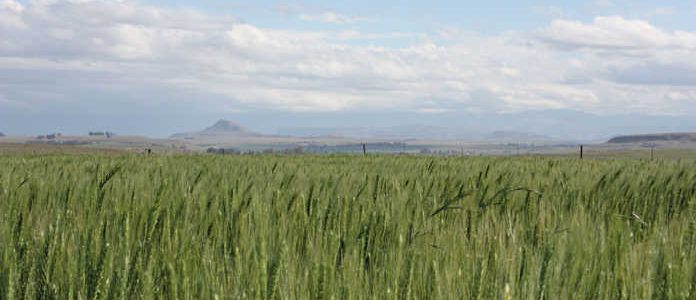
Wheat production gets boost in Zimbabwe

This was announced by the Ministry of Finance and Economic Development in its Treasury Quarterly Bulletin: January-March 2017, which was recently released during a workshop held in Harare to review the 2016/2017 agriculture season.

According to the Treasury Quarterly Bulletin, the target yield was 5t/ha.

Wheat output had been declining in recent years, as a result of frequent droughts and President Robert Mugabe’s land resettlement exercise, which had displaced many productive farmers.

To stem this decline in production, Mugabe’s government this year initiated the Special Winter Wheat Production programme to boost wheat cultivation.

“Wheat output is set to surpass 280 000t this season, which will a go a long way in reducing imports, thus saving the country’s foreign currency,” said the bulletin.

“This level of wheat production will be a huge leap from the current average planted area of 14 000ha for the past three years, [which is] producing wheat [yields] of around 60 000t [per annum].”

Zimbabwe required 400 000t of wheat every year to meet demand, but with local production far below this requirement, 85% of the outstanding amount had to be imported.

Meanwhile, the area planted to tobacco had improved 7% to 110 000ha during the 2016/2017 summer season, compared with the 2015/2016 plantings.

Output was expected to be around 215 million kilograms, surpassing the 2016 output of 203 million kilograms.

Cotton was also expected to recover this season, after government invested US$36 million (R504 million) to assist 400 000 farmers in growing the crop.

A harvest of 100 000t was anticipated. The local cotton beneficiation industry and government recently unveiled the Cotton to Clothing Strategy that sought to stimulate crop cultivation and the processing of cotton into textiles and garments.

It hoped to improve seed-cotton production from 145 000t to 450 000t by 2019, and boost yield 70% to 1 200kg/ha.

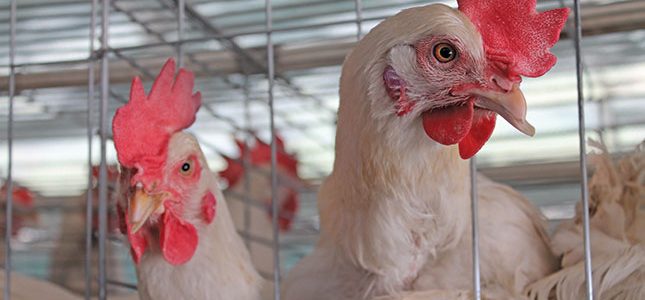
Zim avian flu outbreak: SA farmers must step up biosecurity

Following the recent avian flu outbreak in Zimbabwe, the Department of Agriculture Forestry and Fisheries (DAFF) and the South African Poultry Association (SAPA) have urged SA poultry owners to implement basic biosecurity measures to prevent poultry from coming into contact with wild birds.

DAFF Spokesperson, Makenosi Maroo, said this outbreak did not directly affect South Africa, “but has caused us to be more vigilant with [regard to] our passive surveillance.

Avian influenza is transmitted by wild birds, and we cannot stop them from flying across the borders,” she said.

According to Kevin Lovell, CEO of SAPA, the virus has not affected any farmers in SA yet.

Poultry stakeholders in South Africa are working with Zimbabwean authorities to introduce a nation-wide contingency plan should the virus spread to this country.

The Botswana government had already banned poultry imports from Zimbabwe as a result of the outbreak, according to a statement published on its Facebook page.

According to a report in The Herald newspaper in Zimbabwe, one of that country’s largest poultry producers,  Irvine’s Zimbabwe Private Limited, has been placed under quarantine, and 140 000 birds had been culled following the outbreak.

More than 7 000 of the company’s birds had already succumbed to the disease.

Biosecurity measures recommended by DAFF include:

  • Limiting the number of people working in poultry houses on farms where poultry is suspected of being infected. Personnel dedicated to these areas should ideally not come into contact with those working in other non-infected houses and/or farms.
  • Disinfecting all vehicles entering and leaving farms, and ensuring that only essential vehicles enter farms with suspected infected birds.
  • Preventing clothing, including footwear, equipment and any other materials that may carry the virus from being moved between poultry houses or farms.
  • Burying manure on site and covering it with lime.
  • Using disinfectants such as glutaraldehyde, which are effective against the HPAI virus.
  • Avoiding any pools of water on farms that could attract wild birds, and preventing poultry from sharing water sources with wild birds.
  • Providing feed and water indoors for free-roaming birds or under a low solid roof.