Category Archives: Uncategorized

Zimbabwe to import maize due to erratic harvest prospects

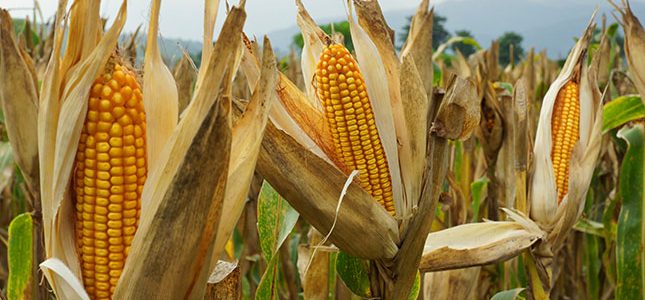
Zimbabwe’s maize harvest is likely to differ substantially from region to region this season, with some areas realising a below-average harvest and others an above-average harvest, due to erratic rainfall during the growing period, industry officials have said.

As a result, the Zimbabwean government would have to import maize, with the UN being called upon to assist in securing more supplies to feed millions of people until April 2021.

Thomas Nherera, a local agricultural economist, said he expected the northern parts of the country to record an above-average maize harvest, but the southern regions to yield a below-average harvest.

“The crop in the Mashonaland provinces, [which make] up approximately the northern half of the country, is doing fairly well,” he said.

“However, in the drier southern provinces the crop is patchy. You get a good crop here and a poor one there. Therefore, there should be an above-average harvest in Mashonaland, but in other areas, the harvest will be below average.”

Rain arrived late, with showers only received in December last year and in small amounts, which was followed by a prolonged mid-season dry spell.

The hot and dry conditions lasted until the second week of January this year, when most of the country received substantial rainfall, which caused flash flooding in parts of western Matabeleland North province.

By then, said Nherera, most crops, especially maize, had permanently wilted in the south of the country so farmers had to replant.

Tobacco, which was mostly grown in the wetter Mashonaland region, as well as cotton that thrived in drier areas, were in good condition, he said.

Livestock, pastures and water sources also improved after the wet spell experienced during mid-January and February, he added.

The government has delayed releasing the crop and livestock assessment report, which is traditionally announced by the end of March. The report provides official figures for the anticipated harvest of major crops, condition of livestock and pastures.

However, pending the release of the document, President Emmerson Mnangagwa launched an international appeal for US$2,2 billion (about R37 billion) on 2 April to respond to the humanitarian needs of the vulnerable.

Of that sum, US$955,67 million (R16 billion) would be earmarked as a food insecurity response for 7,7 million people until April 2021.

Paul Zakariya, executive director of the Zimbabwe Farmers’ Union (ZFU), said the appeal was a planning tool, but also an indication that this year’s maize supply would not be adequate.

Last year, Zimbabwe harvested 776 600t of maize, which was considerably less than the 1,8 million tons needed for one year’s national consumption.

To cover the deficit, the country was importing maize from Tanzania, Uganda, South Africa and Brazil, among other countries.

Commercial millers were also importing the staple, according to the Grain Millers’ Association of Zimbabwe chairperson, Tafadzwa Musarara.

“Maize is flowing into the country. Despite the lockdown [in response to the coronavirus disease pandemic], the borders are open for essential commercial cargo,” he said.

African states urged not to restrict cross-border food trade

The widespread negative socio-economic impact of the coronavirus disease (COVID-19) pandemic globally is likely to include a 2,6% to 7% contraction in sub-Saharan Africa’s agricultural production.

Combined with potential trade blockages of food imports, higher transaction costs and reduced household income, the region could face a severe food security crisis.

This was according to a report published on Thursday in the World Bank Group’s Africa Pulse publication, titled ‘Assessing the Economic Impact of COVID-19 and Policy Responses in Sub-Saharan Africa’.

The report painted a bleak picture for the region, stating that the COVID-19 pandemic had set off the first recession in sub-Saharan Africa in the past 25 years. Economic growth for the region for 2020 was now forecast at -5,1% “from the modest 2,4% figure achieved last year”.

Albert Zeufack, the World Bank’s chief economist for Africa, said that “due to deteriorating fiscal positions and increased public debt, governments in the region do not have much [leeway] in deploying fiscal policy to address the COVID-19 crisis”.

He added that on its own, Africa would not be able to contain COVID-19 and its effects. There was, therefore, an urgent need for temporary bilateral debt relief to help African countries combat the pandemic and also to preserve macroeconomic stability in the region.

Regarding requirements to protect sub-Saharan Africa’s food security, the report said it was critical for governments to reduce international and domestic trade barriers, and ensure that workers in food value chains were able to operate unhindered.

“Early warning systems for food shortages, and associated emergency food provisioning systems, will have to be adjusted to increase attention on rural and urban areas. A majority of [sub-Saharan Africa] households, including in rural areas, are net food buyers, and the poor spend most of their income on food. The pandemic’s impact on vulnerable communities already grappling with hunger or other crises present further challenges,” the report said.

The African Union’s (AU) report, ‘Impact of the Coronavirus (COVID 19) on the African Economy’, released earlier this week, said that a number of the region’s countries were net importers of key food commodities, such as rice and wheat, and increased international prices for these products would negatively affect the importing countries.

“Africa’s imports are hit by COVID-19. The drop in imports and the shortages of basic consumer goods imported from China have increased inflation in South Africa, Ghana, [and others]. Rwanda has recently imposed fixed prices for basic food items such as rice and cooking oil,” the AU report said.

It added that the closure of African countries’ borders in an effort to control the spread of COVID-19, should not be allowed to trigger a food crisis on the continent, especially in West African countries that largely depended on food imports and where food supplies were already becoming scarce.

African states urged not to restrict cross-border food trade

The widespread negative socio-economic impact of the coronavirus disease (COVID-19) pandemic globally is likely to include a 2,6% to 7% contraction in sub-Saharan Africa’s agricultural production.

Combined with potential trade blockages of food imports, higher transaction costs and reduced household income, the region could face a severe food security crisis.

This was according to a report published on Thursday in the World Bank Group’s Africa Pulse publication, titled ‘Assessing the Economic Impact of COVID-19 and Policy Responses in Sub-Saharan Africa’.

The report painted a bleak picture for the region, stating that the COVID-19 pandemic had set off the first recession in sub-Saharan Africa in the past 25 years. Economic growth for the region for 2020 was now forecast at -5,1% “from the modest 2,4% figure achieved last year”.

Albert Zeufack, the World Bank’s chief economist for Africa, said that “due to deteriorating fiscal positions and increased public debt, governments in the region do not have much [leeway] in deploying fiscal policy to address the COVID-19 crisis”.

He added that on its own, Africa would not be able to contain COVID-19 and its effects. There was, therefore, an urgent need for temporary bilateral debt relief to help African countries combat the pandemic and also to preserve macroeconomic stability in the region.

Regarding requirements to protect sub-Saharan Africa’s food security, the report said it was critical for governments to reduce international and domestic trade barriers, and ensure that workers in food value chains were able to operate unhindered.

“Early warning systems for food shortages, and associated emergency food provisioning systems, will have to be adjusted to increase attention on rural and urban areas. A majority of [sub-Saharan Africa] households, including in rural areas, are net food buyers, and the poor spend most of their income on food. The pandemic’s impact on vulnerable communities already grappling with hunger or other crises present further challenges,” the report said.

The African Union’s (AU) report, ‘Impact of the Coronavirus (COVID 19) on the African Economy’, released earlier this week, said that a number of the region’s countries were net importers of key food commodities, such as rice and wheat, and increased international prices for these products would negatively affect the importing countries.

“Africa’s imports are hit by COVID-19. The drop in imports and the shortages of basic consumer goods imported from China have increased inflation in South Africa, Ghana, [and others]. Rwanda has recently imposed fixed prices for basic food items such as rice and cooking oil,” the AU report said.

It added that the closure of African countries’ borders in an effort to control the spread of COVID-19, should not be allowed to trigger a food crisis on the continent, especially in West African countries that largely depended on food imports and where food supplies were already becoming scarce.

UN warns of worsening locust invasion in East Africa

The African Development Bank has approved more than R28 million in emergency relief funding to assist nine countries in East Africa and the Horn of Africa to control vast swarms of desert locusts.

This locust pest was threatening livelihoods and food security in the region, according to a statement by the APO Group, issued on behalf of the African Development Bank Group (AfDB).

The statement said desert locusts were considered to be the most destructive migratory pest in the world.

Traveling locust swarms were common in Africa, Southern Asia and the Middle East, but the insect population started getting out of hand in December 2019 when hundreds of millions of locusts invaded Kenya.

The locusts had since spread to 10 countries in Africa, according to the UN.

According to a statement published by the UN unusual climatic conditions had enabled the locusts to reproduce more rapidly, and with the arrival of the 2020 rainy season (from March to May), the number of locusts could increase 500-fold, unless urgent action was taken and control measures were scaled up.

According to the AfDB statement, a swarm covering a single square kilometre contained up to 80 million locusts that could consume the same amount of food in one day as 35 000 people.

“They also move fast, up to 150km per day,” the statement said.

The funding would be channelled to the Intergovernmental Authority on Development (IGAD), which had been mandated to mobilise resources on behalf of the African Union.

The Food and Agriculture Organization of the United Nations (FAO) would act as the executing agency for the funding.

The initiative aimed to control the spread of the current locust invasion, prevent potential next-generation swarms, and conduct impact assessment and monitoring to enhance preparedness and awareness, the statement said.

The nine beneficiary countries were Djibouti, Eritrea, Ethiopia, Kenya, Somalia, South Sudan, Sudan, Uganda and Tanzania.

Kenya, Ethiopia and Somalia had been particularly hard hit by the outbreak and widespread breeding of locusts.

“In Ethiopia, the locusts have devastated more than 30 000ha of crops, including coffee and tea [plantations] that account for about 30% of the nation’s exports. Despite [the] government’s interventions, swarms and breeding have been reported in large parts of the country. In Djibouti, over 80% of 1 700 agro-pastoral farms located in 23 production zones are affected by desert locust infestations,” the statement said.

At least 18 out of 47 counties in Kenya were also affected, with more than 70 000ha of crops infested, according to a recent FAO report.

Locust swarms were devastating pastureland, maize, cowpeas, beans and other crops despite that country’s government’s efforts to curb the outbreak.

The FAO said total eradication was not possible.

“But we can limit the damage by reducing locust numbers. With locust swarms of this size, the only way to reduce numbers is via aerial spraying with pesticides approved for that purpose. For non-flying juvenile locusts, ground spraying of pesticides is used.”

UN warns of worsening locust invasion in East Africa

The African Development Bank has approved more than R28 million in emergency relief funding to assist nine countries in East Africa and the Horn of Africa to control vast swarms of desert locusts.

This locust pest was threatening livelihoods and food security in the region, according to a statement by the APO Group, issued on behalf of the African Development Bank Group (AfDB).

The statement said desert locusts were considered to be the most destructive migratory pest in the world.

Traveling locust swarms were common in Africa, Southern Asia and the Middle East, but the insect population started getting out of hand in December 2019 when hundreds of millions of locusts invaded Kenya.

The locusts had since spread to 10 countries in Africa, according to the UN.

According to a statement published by the UN unusual climatic conditions had enabled the locusts to reproduce more rapidly, and with the arrival of the 2020 rainy season (from March to May), the number of locusts could increase 500-fold, unless urgent action was taken and control measures were scaled up.

According to the AfDB statement, a swarm covering a single square kilometre contained up to 80 million locusts that could consume the same amount of food in one day as 35 000 people.

“They also move fast, up to 150km per day,” the statement said.

The funding would be channelled to the Intergovernmental Authority on Development (IGAD), which had been mandated to mobilise resources on behalf of the African Union.

The Food and Agriculture Organization of the United Nations (FAO) would act as the executing agency for the funding.

The initiative aimed to control the spread of the current locust invasion, prevent potential next-generation swarms, and conduct impact assessment and monitoring to enhance preparedness and awareness, the statement said.

The nine beneficiary countries were Djibouti, Eritrea, Ethiopia, Kenya, Somalia, South Sudan, Sudan, Uganda and Tanzania.

Kenya, Ethiopia and Somalia had been particularly hard hit by the outbreak and widespread breeding of locusts.

“In Ethiopia, the locusts have devastated more than 30 000ha of crops, including coffee and tea [plantations] that account for about 30% of the nation’s exports. Despite [the] government’s interventions, swarms and breeding have been reported in large parts of the country. In Djibouti, over 80% of 1 700 agro-pastoral farms located in 23 production zones are affected by desert locust infestations,” the statement said.

At least 18 out of 47 counties in Kenya were also affected, with more than 70 000ha of crops infested, according to a recent FAO report.

Locust swarms were devastating pastureland, maize, cowpeas, beans and other crops despite that country’s government’s efforts to curb the outbreak.

The FAO said total eradication was not possible.

“But we can limit the damage by reducing locust numbers. With locust swarms of this size, the only way to reduce numbers is via aerial spraying with pesticides approved for that purpose. For non-flying juvenile locusts, ground spraying of pesticides is used.”

Botswana beef farmers fear market losses due to Covid-19

The public emergency declared by Botswana’s president Mokgweetsi Masisi, to stem the spread of the coronavirus disease (COVID-19) global pandemic, has had a direct impact on the country’s beef cattle production industry.

This was according to Thomas Harvey, Absa’s country head of agribusiness in Botswana.

He said the closing of the border between Botswana and South Africa meant that producers in Botswana had lost access to one of their most important markets.

READ A grass-based approach to beef stud farming

“At the moment, the export market is the most lucrative for local producers. The majority of the Botswana citizenry depends on cattle for their livelihood, and beef cattle production is therefore a strategic focus for government,” he told Farmer’s Weekly.

The declaration of a public emergency also meant the closure of the tourism industry for the time being.

According to Harvey, this implied a marked decline in the demand for more expensive meat cuts such as fillet and steak. The ban on social events would further lower the demand for red meat.

Due to the impact of the lockdown on especially small- and medium-sized businesses, job losses could increase, resulting in a decline in purchasing power.

READ ‘Shipboard livestock exports aim to advance new farmers’

He said the Botswana beef industry would consequently have to reorganise and restructure itself to create new markets, but this could take up to 24 months.

While the decline in the country’s livestock herd as result of the drought meant that, for the time being, the local market in Botswana was large enough to absorb the current supply. However, to ensure the future sustainability of the industry alternative markets still needed to be developed.

Click here for COVID19 updates.

Botswana beef farmers fear market losses due to Covid-19

The public emergency declared by Botswana’s president Mokgweetsi Masisi, to stem the spread of the coronavirus disease (COVID-19) global pandemic, has had a direct impact on the country’s beef cattle production industry.

This was according to Thomas Harvey, country head of Agri Barclays in Botswana.

He said the closing of the border between Botswana and South Africa meant that producers in Botswana had lost access to one of their most important markets.

READ A grass-based approach to beef stud farming

“At the moment, the export market is the most lucrative for local producers. The majority of the Botswana citizenry depends on cattle for their livelihood, and beef cattle production is therefore a strategic focus for government,” he told Farmer’s Weekly.

The declaration of a public emergency also meant the closure of the tourism industry for the time being.

According to Harvey, this implied a marked decline in the demand for more expensive meat cuts such as fillet and steak. The ban on social events would further lower the demand for red meat.

Due to the impact of the lockdown on especially small- and medium-sized businesses, job losses could increase, resulting in a decline in purchasing power.

READ ‘Shipboard livestock exports aim to advance new farmers’

He said the Botswana beef industry would consequently have to reorganise and restructure itself to create new markets, but this could take up to 24 months.

While the decline in the country’s livestock herd as result of the drought meant that, for the time being, the local market in Botswana was large enough to absorb the current supply. However, to ensure the future sustainability of the industry alternative markets still needed to be developed.

Click here for COVID19 updates.

Food security at risk as African countries lock down

Fears are growing about the impact the coronavirus disease (COVID-19) global pandemic could have on food supplies in some of South Africa’s neighboring countries, as citizens there have also been ordered to stay indoors.

Lesotho began a three-week nationwide lockdown on 22 March, following South Africa in implementing some of the world’s toughest measures to combat the spread of COVID-19.

READ Lack of informal trading during lockdown worry farmers

Zimbabwe has also followed suit, with both countries declaring their agriculture sectors essential industries, which meant that farmers would be allowed to continue operating.

However, Dr Theo de Jager, president of the World Farmers’ Organisation, pointed out that as a country, Lesotho had never been food self-sufficient.

“It is a country situated in a mountainous landscape and therefore cannot produce everything it needs to feed its citizens,” he said.

De Jager said he believed that special arrangements would have to be made for trade and, in particular, the movement of processed food across the border.

Local media in Zimbabwe reported that the country could face a hunger crisis amid the pandemic, due to the country’s economic challenges and a shortage of staple foods such as maize and maize meal, following a devastating two-year drought.

READ Challenges to feeding a growing population

De Jager agreed with this assessment, saying the country had already experienced a variety of major challenges even before the lockdown measures were implemented.

“Zimbabwe hasn’t been in a worse position since 2000,” he said.

He added that while the country was expecting a relatively good crop, it had not yet been harvested, while livestock supply was also low.

De Jager said that the lockdown in South Africa could result in a severe shortage of commodities and cash flow for Zimbabwe.

“A large part of Zimbabwe’s household food security is covered from South Africa by people living and working in the country and sending food and money to their families in Zimbabwe.”

He stressed that this could become a major problem in a country that relied on international trade for food security.

READ Women in agriculture are key to boosting food security

Meanwhile, Bloomberg reported that some countries had halted exports in an attempt to secure domestic food supplies during the COVID-19 pandemic.

Kazakhstan, one of the world’s largest exporters of wheat, banned exports of the grain and various other products, while Vietnam temporarily suspended new rice export contracts. Freshplaza also reported that Turkey had suspended lemon exports.

According to De Jager, it was only logical for countries to first look out for their own citizens.

“That’s why it’s so important to protect your country’s industries and keep them healthy. If an industry dies, you won’t be able to get it up and running again soon,” he said.

Food security at risk as African countries lock down

Fears are growing about the impact the coronavirus disease (COVID-19) global pandemic could have on food supplies in some of South Africa’s neighboring countries, as citizens there have also been ordered to stay indoors.

Lesotho began a three-week nationwide lockdown on 22 March, following South Africa in implementing some of the world’s toughest measures to combat the spread of COVID-19.

READ Lack of informal trading during lockdown worry farmers

Zimbabwe has also followed suit, with both countries declaring their agriculture sectors essential industries, which meant that farmers would be allowed to continue operating.

However, Dr Theo de Jager, president of the World Farmers’ Organisation, pointed out that as a country, Lesotho had never been food self-sufficient.

“It is a country situated in a mountainous landscape and therefore cannot produce everything it needs to feed its citizens,” he said.

De Jager said he believed that special arrangements would have to be made for trade and, in particular, the movement of processed food across the border.

Local media in Zimbabwe reported that the country could face a hunger crisis amid the pandemic, due to the country’s economic challenges and a shortage of staple foods such as maize and maize meal, following a devastating two-year drought.

READ Challenges to feeding a growing population

De Jager agreed with this assessment, saying the country had already experienced a variety of major challenges even before the lockdown measures were implemented.

“Zimbabwe hasn’t been in a worse position since 2000,” he said.

He added that while the country was expecting a relatively good crop, it had not yet been harvested, while livestock supply was also low.

De Jager said that the lockdown in South Africa could result in a severe shortage of commodities and cash flow for Zimbabwe.

“A large part of Zimbabwe’s household food security is covered from South Africa by people living and working in the country and sending food and money to their families in Zimbabwe.”

He stressed that this could become a major problem in a country that relied on international trade for food security.

READ Women in agriculture are key to boosting food security

Meanwhile, Bloomberg reported that some countries had halted exports in an attempt to secure domestic food supplies during the COVID-19 pandemic.

Kazakhstan, one of the world’s largest exporters of wheat, banned exports of the grain and various other products, while Vietnam temporarily suspended new rice export contracts. Freshplaza also reported that Turkey had suspended lemon exports.

According to De Jager, it was only logical for countries to first look out for their own citizens.

“That’s why it’s so important to protect your country’s industries and keep them healthy. If an industry dies, you won’t be able to get it up and running again soon,” he said.

Zimbabwean tobacco auctions expected to be delayed

The Zimbabwean tobacco industry is being hard hit by the global coronavirus disease (COVID-19) pandemic, which has resulted in President Emmerson Mnangagwa closing the country’s borders and banning gatherings of more than 50 people, among other measures.

As Africa’s largest producer, it was estimated that 14% of tobacco grown in Zimbabwe was sold on the country’s three auction floors in Harare.

This season, about 140 000 farmers produced the crop. Auction floors became increasingly busy from March when the marketing season traditionally began. This lasted until August when the marketing season ended.

Immediate past chairperson of the Tobacco Industry and Marketing Board and local tobacco farmer, Monica Chinamasa, however, expressed concern that the thousands of people who would throng to auction floors when the selling season began on 20 April, could be at risk of COVID-19 infection.

She therefore suggested that the start of the trading period be delayed by three months.

“I have been speaking to colleagues and we all agree [not to] rush into opening the floors, but wait until the situation is clearer. Getting so many people at one place at the same time can be dangerous in light of COVID-19.”

Chief executive officer of the board, Andrew Matibiri, acknowledged the threat of COVID-19 to normal tobacco auctioning, but denied that the delay in the start of the season this year was the result of fears about the pandemic.

He said that the delay was rather caused by late rainfall that negatively affected land preparation, planting and the growth of the crop.

“Yes, auction floors attract many farmers, but we are working on a raft of measures [to safeguard auction-goers]. However, we will abide by whatever regulations the government has already announced or will announce. But I can say the crop is doing well. Small-scale farmers are reaping and curing it.

“The quality will be good, but total output will be lower than last year due to the late rain received [across] the country.”

According to the board, Zimbabwe produced a record 256 million kilograms of tobacco last season at an average of US$2,03/kg (about R34/kg).

“Considering the (COVID-19) threat, I don’t see a problem if the selling season is delayed by three months from now. If tobacco is properly cured, baled and stored, a farmer can have it for up to three months. We can do that now so that we see how the pandemic pans out,” Chinamasa said.