Category Archives: Uncategorized

Zambia fights damaging cassava root rot outbreak

Zambia fights damaging cassava root rot outbreakZambia fights damaging cassava root rot outbreak
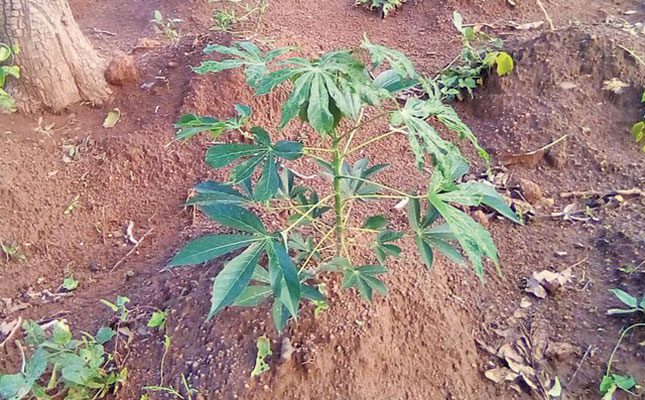
The disease damages cassava plants and makes their roots inedible.
Photo: Wikimedia Commons
– Advertisement –

Authorities in Zambia are working to contain a damaging outbreak of root rot disease that could lead to shortages of a key food staple for the majority of households in the country.
Over the past few years, root rot or cassava brown streak virus disease (CBSD) has affected north-eastern Zambia (Luapula Province) near the Democratic Republic of the Congo.

Recently, it spread to the north-western parts of Zambia, which adjoin the border with Angola and Namibia.

The disease outbreak threatens food security for more than five million people, according to local authorities.

– Advertisement –

It is being fuelled by the cassava mosaic virus (CMV) which is transmitted by whitefly (Bemisia tabaci) and primarily infects cassava plants.

Because cassava is vegetatively propagated, it is particularly vulnerable to viruses. CMV is present in all cassava-growing areas, and has resulted in yield losses of between 50% and 70% countrywide.

Rotting crops
Mwansabombwe District MP Kabaso Kampampi expressed regret at the escalating cases of the disease, which has affected more than 10 000ha, leaving many households under threat of hunger after the 2022/23 season.

“Most of our farmers have lost out because much of the crop is rotting and will not be harvested this year, and that means they will need relief food,” he said.

Luapula faces a similar fate, with more than 3 000ha affected by the disease.

Luapula MP Katotobwe Chanda said: “We’re hoping a quick solution will be found to reduce the damage, otherwise most farmers will have nothing to show after the 2022/23 season.”

Zambia National Cassava Association chairperson Brighton Mulongo said the damage done by CBSD spurred on by CMD, not to mention the looming food insecurity, would only be mitigated by collaboration among various players.

Minister of agriculture Mtolo Phiri said the government was “looking at various strategies to stop the disease and we have formed task groups”.

The UN’s Food and Agriculture Organization (FAO) and other groups are working with the Zambian government to mitigate the spread of CBSD and CMD, starting with districts in Luapula before moving on to other parts of the country.

Green Mbozi, director of agribusiness and marketing at Zambia’s Ministry of Agriculture and Cooperatives, underscored the importance of cassava to national food security.

Technical expertise
The Technical Cooperation Programme (TCP), which was created to enable the FAO to make its know-how and technical expertise available to member countries upon request, will strive to complement government’s efforts in reducing the effects and spread of CBSD and CMD.

The TCP will seek to build partnerships and create links with the communities and other key players within the cassava value chain.

Mbozi commended the FAO for the support rendered by the TCP.

“We appreciate FAO’s support and partnership in transforming different agricultural value chains in the country, cassava included,” he said.

FAO country representative Suze-Percy Filippini praised the Zambia Agricultural Research Institute for noting the seriousness of the damage caused to cassava crop production by CBSD and CMD.

“The outbreak of cassava disease in Kaputa and Chiengi districts has become a source of concern. “The disease causes serious food insecurity for smallholder farmers, which does not sit well with the FAO’s aspiration for better nutrition and better life,” Filippini said.

Ethanol
In addition to its being a food staple, cassava is also used to make ethanol. More than 25 000 farmers under Musika, a non-profit company with a mandate to stimulate and support private investment in Zambia’s agricultural market, are now growing drought-tolerant varieties of cassava, compared with 5 000 five years ago.

Currently, 250t of cassava flour a day is being turned into ethanol for hand sanitisers and other products sold locally or exported to neighbouring countries, according to Pamela Hamasaka, corporate affairs manager at Musika.

However, some critics have raised concerns over the excess use of food crops like cassava for industrial purposes, saying this threatens the region’s food security.

According to research conducted by Zambia’s Ministry of Agriculture and Cooperatives, the country’s cassava output has risen by an average of 6% over the past five years and is poised to more than treble as demand by commercial users increases.
‘Fair compensation needed to mitigate crop damage caused by wildlife’

SMALL-SCALE crop farmers in the Zambezi region of Namibia recently called on the Namibian government to compensate them for the actual value of crops destroyed by wildlife such as elephants and hippos.

‘Fair compensation needed to mitigate crop damage caused by wildlife’
Elephants and hippos in Namibia cause serious damage to farms through the destruction of crops.
Photo: Annelie Coleman
– Advertisement –

That country’s Ministry of Environment, Forestry, and Tourism currently reimbursed farmers at R1 000/ha for damage to their crops.The Namibia, a local newspaper, reported that Lister Lutiyo, a crop producer from the Nongozi village in the Sangwali area, said that around 4,5ha of his maize and watermelon crops had been destroyed by elephants thus far in 2023.

“I planned to start harvesting at the end of March 2023 and spent [about R14 800] on ploughing and field preparation. However, now I won’t be able to get the money invested in my crop fields and the government will only pay me [about R4 797], which is not even close to covering my losses,” Lutiyo said.

He urged the government to increase the compensation amount to at least cover half of farmers’ losses.

– Advertisement –

Matthew Vuyalo, a crop producer in Maunga village, added that elephants and hippos were responsible for destroying his crops year after year. He added that he was told by the authorities that he did not qualify for compensation, as the elephants had not “eaten enough” of his crops.

Alfred Matomola of the Ministry of Environment, Forestry, and Tourism told The Namibia that it was currently “peak season” for human-wildlife conflict and crop damage in the Zambesi region. The Ministry thus recently launched a three-month Mudumo South Complex human-wildlife conflict joint operation to mitigate the ever-increasing human-wildlife conflict in the area.

Meanwhile, Piet Gouws, president of the Namibia Agricultural Union, said that human-wildlife conflict had a marked impact on commercial agriculture in Namibia and livestock production in particular. He had previously told Farmer’s Weekly that the overpopulation of elephants in the country had the potential to bring the national agriculture sector to its knees.

“The invasion of farms by herds of elephants in the northern parts of the country, especially in the region around the Etosha National Park, has a direct impact on the production potential of farms. While the Namibian agriculture sector is committed to the conservation of all animal species, and elephants in particular, a balance between nature and agriculture must be found and maintained,” he said.

Severe drought in Namibia a cause for concern

A major part of Namibia is experiencing an acute drought, with the situation particularly serious south of the capital, Windhoek, with little or no rain received during the 2022/23 rainy season. According to Thinus Pretorius, chairperson of Namibia’s Livestock Producers’ Organisation, some parts south of Keetmanshoop had not received any rain.

Severe drought in Namibia a cause for concern
– Advertisement –

“This drought has had a severe impact on the country so far, especially in light of the fact of the devastating drought that occurred between 2013 and 2019. Livestock producers in our country are still rebuilding livestock numbers after that drought, but now have to reduce numbers again,” Pretorius told Farmer’s Weekly.

According to Pretorius, the western parts of northern and central Namibia were also desperately dry and grain farmers in the dryland grain-producing areas, including Tsumeb, Otavi and Grootfontein, were severely affected.

“The situation is dire. Even if we received rain now, we’re at the tail end of the growth season. With the first frosts, the nutritional value of the little grazing that’s left will be halved.

– Advertisement –

“Feeding livestock is not an option in Namibia because of the exorbitant cost. Most of the animal feed is imported from neighbouring countries such as South Africa and Zambia,” he said.

In a report published by the Namibia Economist, Erastus Ngaruka, Technical Advisor: Livestock and Rangeland Management, Agricultural Bank of Namibia, said: “Now more than ever, the events and effects of climate change are evident in Namibia.”

According to Ngaruka, since the 2013 and 2019 drought, rainfall in Namibia had been erratic, coupled with events such as disease and pest outbreaks and floods.

“However, even if the remaining months receive rain, it doesn’t mean an immediate improvement on rangeland productivity. But [this] will have a long-term advantage for soil rehydration and soil moisture content, which will be needed by plants after the winter dormancy period,” Ngaruka added.

He said farmers needed to develop drought-coping strategies to ensure their animals survived until the next rainy season. They needed to prepare for water scarcity, increased temperatures, poor grazing conditions, and associated threats to livestock health.
During drought, market prices usually fell drastically due to increased costs of production and the poor condition of livestock.

Despite easing, Zim’s food price inflation remains highest in the world

Food price pressures that have beset Zimbabwe have persisted, giving the Southern African country the unenviable position of having the world’s worst inflation, despite some slight moderation, a recent report by the World Bank showed.

Despite easing, Zim’s food price inflation remains highest in the world
Zimbabwe maintained its position as the country with the highest food price increase in the world, according to the World Bank. While there was an increase in almost all low- and middle-income countries, Zimbabwe’s food inflation still tipped the scales, signifying the challenges facing the Southern African nation.
Photo: Annelie Coleman
– Advertisement –

The World Bank said that Zimbabwe’s CPI eased to 92,3% year-on-year (y/y) in February 2023, down from the prior month’s 229,8% y/y increase, and moving further away from the 18-month high of 285% registered in August 2022.

Annual inflation has been on a downwards trend since September 2022, and reached its lowest level since March 2022 in February 2023.

In its latest report, the World Bank ranked Zimbabwe ahead of Venezuela, while Lebanon was in third place. The development came after a spike in the prices of basic foodstuffs and other commodities in Zimbabwe. In 2022, Zimbabwe ranked second only to Lebanon, but it has since overtaken the Middle Eastern country.

– Advertisement –

According to a Trading Economics report, the most important categories in the Consumer Price Index (CPI) food basket included food and non-alcoholic beverages at 31%, housing and utilities at 28%, and transport at 8%. Miscellaneous goods and services accounted for 7%, while household furniture, equipment and maintenance accounted for 5%, and alcoholic beverages and tobacco for another 5%.

Food price pressures were ascribed to, among other factors, the pricing of most food items in Zimbabwe in US dollars, while the majority of the workforce’s earnings were in the local currency.

Annelie Coleman represents Farmer’s Weekly in the Free State, North West and Northern Cape.
Agriculture is in her blood. She grew up on a maize farm in the Wesselsbron district where her brother is still continuing with the family business.
Annelie is passionate about the area she works in and calls it ‘God’s own country’. She’s particularly interested in beef cattle farming, especially with the indigenous African breeds.
She’s an avid reader and owns a comprehensive collection of Africana covering hunting in colonial Africa, missionary history of same period, as well as Rhodesian literature.