Category Archives: Uncategorized

Wheat production gets boost in Zimbabwe

This was announced by the Ministry of Finance and Economic Development in its Treasury Quarterly Bulletin: January-March 2017, which was recently released during a workshop held in Harare to review the 2016/2017 agriculture season.

According to the Treasury Quarterly Bulletin, the target yield was 5t/ha.

Wheat output had been declining in recent years, as a result of frequent droughts and President Robert Mugabe’s land resettlement exercise, which had displaced many productive farmers.

To stem this decline in production, Mugabe’s government this year initiated the Special Winter Wheat Production programme to boost wheat cultivation.

“Wheat output is set to surpass 280 000t this season, which will a go a long way in reducing imports, thus saving the country’s foreign currency,” said the bulletin.

“This level of wheat production will be a huge leap from the current average planted area of 14 000ha for the past three years, [which is] producing wheat [yields] of around 60 000t [per annum].”

Zimbabwe required 400 000t of wheat every year to meet demand, but with local production far below this requirement, 85% of the outstanding amount had to be imported.

Meanwhile, the area planted to tobacco had improved 7% to 110 000ha during the 2016/2017 summer season, compared with the 2015/2016 plantings.

Output was expected to be around 215 million kilograms, surpassing the 2016 output of 203 million kilograms.

Cotton was also expected to recover this season, after government invested US$36 million (R504 million) to assist 400 000 farmers in growing the crop.

A harvest of 100 000t was anticipated. The local cotton beneficiation industry and government recently unveiled the Cotton to Clothing Strategy that sought to stimulate crop cultivation and the processing of cotton into textiles and garments.

It hoped to improve seed-cotton production from 145 000t to 450 000t by 2019, and boost yield 70% to 1 200kg/ha.
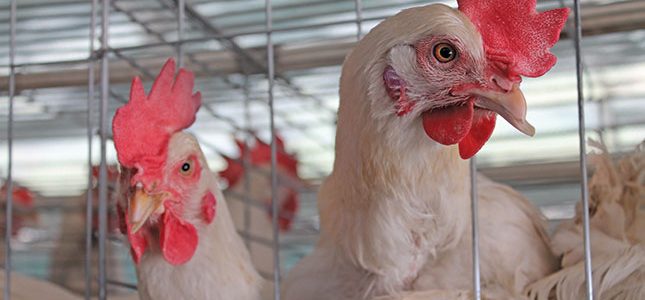
Zim avian flu outbreak: SA farmers must step up biosecurity

Following the recent avian flu outbreak in Zimbabwe, the Department of Agriculture Forestry and Fisheries (DAFF) and the South African Poultry Association (SAPA) have urged SA poultry owners to implement basic biosecurity measures to prevent poultry from coming into contact with wild birds.

DAFF Spokesperson, Makenosi Maroo, said this outbreak did not directly affect South Africa, “but has caused us to be more vigilant with [regard to] our passive surveillance.

Avian influenza is transmitted by wild birds, and we cannot stop them from flying across the borders,” she said.

According to Kevin Lovell, CEO of SAPA, the virus has not affected any farmers in SA yet.

Poultry stakeholders in South Africa are working with Zimbabwean authorities to introduce a nation-wide contingency plan should the virus spread to this country.

The Botswana government had already banned poultry imports from Zimbabwe as a result of the outbreak, according to a statement published on its Facebook page.

According to a report in The Herald newspaper in Zimbabwe, one of that country’s largest poultry producers,  Irvine’s Zimbabwe Private Limited, has been placed under quarantine, and 140 000 birds had been culled following the outbreak.

More than 7 000 of the company’s birds had already succumbed to the disease.

Biosecurity measures recommended by DAFF include:

  • Limiting the number of people working in poultry houses on farms where poultry is suspected of being infected. Personnel dedicated to these areas should ideally not come into contact with those working in other non-infected houses and/or farms.
  • Disinfecting all vehicles entering and leaving farms, and ensuring that only essential vehicles enter farms with suspected infected birds.
  • Preventing clothing, including footwear, equipment and any other materials that may carry the virus from being moved between poultry houses or farms.
  • Burying manure on site and covering it with lime.
  • Using disinfectants such as glutaraldehyde, which are effective against the HPAI virus.
  • Avoiding any pools of water on farms that could attract wild birds, and preventing poultry from sharing water sources with wild birds.
  • Providing feed and water indoors for free-roaming birds or under a low solid roof.

Fall armyworm invades as Kenya recovers from drought

According to reports more than 400 000ha have been affected by fall armyworm in East Africa.
Photo: Canadian Biodiversity Information Facility

Maize farmers in Kenya have expressed concern over the threats posed by FAW, and Wilson Ronno, head of the crop production unit at the UN Food and Agricultural Organization (FAO) office for Kenya, was reported as estimating that more than 400 000ha have been affected in East Africa.

According to a report by Voice of America, the FAW first landed in Kenya around March. It quotes Joe DeVries, vice-president for programme development at the Alliance for a Green Revolution in Africa, as saying that the fall armyworm spread rapidly to the region after first being reported in Nigeria earlier in the year.

“We’re talking about a pest that literally just arrived this year in this region and is already causing major concern among farmers, partly because they’ve never seen it before and don’t know how to control it, and partly because of the damage that’s already occurred on their farms,” said DeVries.

In a brochure prepared by the Kenya Agricultural and Livestock Research Organization, Kenya’s Ministry of Agriculture said the FAW infestation was first detected on off-season irrigated maize in Trans Nzoia County in the second week of March. A subsequent field survey confirmed the pest in the Bungoma, Kakamega, Uasin Gishu, Nandi, Kericho, Baringo, Nakuru, and Busia counties.

A subsequent field survey confirmed the pest in the Bungoma, Kakamega, Uasin Gishu, Nandi, Kericho, Baringo, Nakuru, and Busia counties.

The report said the pest is spreading rapidly and could cause 100% loss in crops including maize, rice, pasture, sorghum, millet, cotton and certain vegetable crops. It added: “This will result in national food insecurity and loss of income unless urgent measures are implemented.”

It added: “This will result in national food insecurity and loss of income unless urgent measures are implemented.”

An FAO report compiled before 25 April said the pest had also spread to Bomet and Narok in South Rift, and Baringo in Central Rift. There have been unconfirmed reports of FAW in eastern and coastal areas.

Government steps in over maize prices

An FAO food price monitoring analysis report on Kenya said the government there had recently introduced temporary subsidies in an effort to reduce steadily increasing maize prices.

“Prices were at record or near-record highs in April, underpinned by reduced supplies from the 2016 short-rains second season harvest and concerns over the upcoming 2017 long-rains harvest due to early season dryness and armyworm infestations,” it stated.

New strategy to boost Zimbabwe’s livestock production

In October last year the Zimbabwean government introduced a similar programme for maize farmers, which has been credited for the increase in maize output, to around 2,2 million tons, this year.

The programme spent US$253 million (R3,8 billion) to support farmers to grow the staple crop on 153 000ha.

Encouraged by the programme’s success, the government has raised US$140 million (R2,1 billion) to finance winter wheat production, aiming to put about 70 000ha under cultivation.

Vice President Emmerson Mnangagwa said ministers approved the command livestock model on Monday, 8 May.

Mnangagwa announced the Cabinet decision when he delivered a public lecture at Midlands State University, in Gweru in central Zimbabwe, on 10 May, saying: “Cabinet on Monday authorised that we proceed with [the] command livestock programme, targeting beef, dairy and poultry and the production of associated equipment.

“This will trigger economic activity as agro-processing companies, transporters, marketers and retail and related services will be distributing stock feeds to farmers, creating additional employment.”

He added that the improved cereal harvest, estimated at 2,7 million tons, including small grains, would help improve stock feed supplies for the livestock farmers who would be selected to participate in the command livestock scheme.

Adopting this state-led approach to animal husbandry follows the government recently approving an US$18 million (R270 million) investment to revive the Cold Storage Company, a government-owned meat-processing concern.

Joseph Made, minister of agriculture, recently reported that 600 000 livestock farmers in four south western provinces were already stacking hay and creating paddocks under the command livestock initiative.

Speaking to Farmer’s Weekly, Made said: “Like I said a few weeks ago, Namibia has offered to support us, the same for Botswana. They have well-developed livestock sectors and they will help us. With regard to Namibia they have very special breeds of beef cattle and goats that we feel can help improve our stock.” Made added that the initiative would prioritise beef and dairy production, before incorporating smaller stock.

Livestock farmers have welcomed the initiative, saying the government had appeared to favour and support crop producers, with yearly subsidised inputs and market access.

Paul Zakariya, executive director of the Zimbabwe Farmers’ Union commented on the programme, saying:  “Livestock producers need support [just] as crop farmers do. It appears that all these years much support was going to crops while livestock was ignored. With this initiative, this very important sector should improve in terms of animal population and quality, farm implements and machinery.”

“This is a good initiative that will get us up in a big way”.

Zambian farmers want zero tax rating on inputs

For Zambia to become a breadbasket in Africa, it was necessary for its government to urgently implement a zero tax rate on products essential for enhanced agricultural production.

This was according to Jervis Zimba, president of the Zambia National Farmers’ Union (ZNFU), who issued a statement ahead of Agritech Expo Zambia 2017, held at the end of last month.

In a statement issued by his farmers’ union, Zimba said the main challenge facing farmers worldwide was the increasing cost of agricultural inputs and the diminishing returns of farming.

He added that ZNFU was engaging with the Zambian government to find ways of reducing the cost of production for that country’s farmers.

“We’ve always told government [that] if you want agriculture to be the mainstay of the economy, then instead of introducing this tax and that tax, they need to zero-rate agriculture completely. If there is zero rating for a couple of years, we’ll see investments coming through,” Zimba said.

He expressed the hope that in its next budget the Zambian government would give action to this call from the ZNFU.

Zimba used the ZNFU statement as an opportunity to remind Zambian farmers at all scales of production to attend the free-of-charge Agritech Expo Zambia 2017, which was held from 27 to 29 April in the Chisamba region.

“We as ZNFU are pushing the agenda of diversification. Most of our farmers are small-scale, and they want to grow maize, cotton and soya beans. But we’re now seeing that our farmers are trying to diversify to other crops. And we’re looking at the issue of mechanisation, getting away from the old traditional way of doing our work,” he said.

Kenya cashew nut exports decline after government ban

It has been reported that the country’s nut industry is in dire straits after an export ban imposed by the Kenyan government in 2009.

According to the International Nut and Dried Fruit Council Foundation (INC) some countries have reported imports of relatively small amounts of shelled cashews from Kenya.

INC Ambassador for Kenya, Mbugua Nugi, said: “Kenya’s cashew nut industry did not report cashew exports during the last few years since the ban, either (sic) in-shell nor shelled.”

Nugi said the ban has its pros and cons, and could be lifted through an Act of parliament based on whether it had achieved its objectives, “however, its genesis and intention was and still remains to encourage more value addition through processing of raw cashew within Kenya’s borders and support the economy by providing jobs and more foreign exchange earnings”.

He added that this was “in line with the aspirations of Kenya’s vision 2030 and the desire to progress from a primary-producer-based economy towards manufacturing and an industrialised nation”.

But some farmers have been discouraged, saying they were being exploited by processors manipulating prices to their advantage, and had, according to reports, started uprooting their cashew trees.

The government is encouraging these farmers to replant the trees, and issuing free or subsidised seedlings and extension services. The seedlings are significant, as most of Kenya’s cashew trees are more than 40 years old.

There are also projects aimed at specific agronomic and market development challenges.

These will be funded by non-governmental organisations such as the United States Agency for International Development (USAID); the Danish International Development Agency (DANIDA); and the African Cashew Alliance (ACA) Walmart Foundation; among others, to support the value chain.

World Bank aids Ivory Coast cocoa industry

The World Bank is set to grant funds of between US$100 million and US$125 million (R1,3 billion and R1,7 billion) to Ivory Coast to mitigate the drop in cocoa prices. Cocoa is a key commodity in the west African country.

The World Bank hoped to release the funding within the next few months, according to news website Abidjan.net, which quoted Makhtar Diop, the World Bank’s vice-president for Africa.

The amount of aid would depend on the strength of the reforms that the Ivory Coast government put in place, Jean-Noel Amantchi Gogoua, senior operations officer at the World Bank’s Ivory Coast offices, told Bloomberg.

Cocoa is Ivory Coast’s largest export crop, accounting for about 20% of the nation’s shipments. The country was forced to cut its 2017 budget by 10% due to the fall in the cocoa price, Bloomberg reported.

Fairtrade Foundation, an organisation that supports the development of farming and worker communities internationally, said it welcomed any support to stabilise the economic situation in Cote d’Ivoire.

“But, above anything else, Fairtrade is concerned about the consequences of the fall of the cocoa price for hundreds of thousands of small farmers in the country who rely on cocoa farming for their livelihood,” said Verónica Pérez Sueiro , Interim Head of Communications and Brand at Fairtrade Foundation.

“Fairtrade calls upon all stakeholders in the supply chain to play their part in improving this situation and securing a decent income for farmers. In these difficult times, the safety net provided by the Fairtrade Minimum Price, plus the additional Fairtrade Premium for social and business development projects, are proving to be more needed than ever.”

FAO hosts fall armyworm workshop in Kenya

The United Nations Food and Agriculture Organisation in Southern Africa (FAOSA) is hosting a two-day meeting in Nairobi, Kenya, to discuss the region’s response to fall armyworm (FAW). The meeting closes tomorrow, 26 April.

Native to the Americas, FAW has spread rapidly across parts of Africa since about mid-2016, and poses a serious threat to food security in affected areas.

According to FAOSA , the meeting’s objectives included: reviewing the current status of FAW infestation in southern Africa; agreeing on a harmonised system to monitor FAW and assess its impacts; reviewing and adopting standard protocols for FAW assessments; sharing country-specific experiences of FAW infestation and management efforts, to develop a framework for monitoring and managing FAW at regional and country levels; and identifying opportunities for collaboration to sustainably manage FAW in southern Africa.

Dr Peter Chinwada, an entomologist at the University of Zimbabwe, said that stakeholders had to understand the biology, ecology, host plant spectrum, and exotic origins of FAW to manage the pest.

He highlighted the need to concurrently control other crop pests, without promoting FAW’s resistance to current effective pesticides.

Chinwada pointed out that cash-strapped and poorly equipped farmers were particularly vulnerable without the pest control resources wealthier farmers could afford.

When looking at more cost-effective solutions, farmers at the meeting noted some of the pest’s ecological weaknesses.

These include natural predators, susceptibility to certain chemicals, and intolerance for heavy rains and low temperatures, particularly during the FAW’s early larval development stages. This knowledge could help poorer farmers control the pest.

FAOSA’s umbrella body, FAO, has also prioritised assistance to tackling FAW in southern Africa.

Zimbabwe plans to revive beef industry

The Zimbabwe government recently announced it had found investors to commit over
US$48 million to restore CSC, which had lost markets and investment, and accrued significant debt.

Formerly the Cold Storage Commission, CSC had to dispose assets to pay debts estimated at over US$23 million, including salary arrears of US$3,5 million.

Joseph Made, minister of agriculture, mechanisation and irrigation development, told the national weekly, The Sunday Mail, that parties from the United Arab Emirates, Switzerland and Rwanda were to invest over US$48 million in CSC.

“We are undertaking surgical work at the Cold Storage Company, which will superintend Command Livestock, which targets growing livestock and beef exports,” Made said.

The investment should help boost breeding, acquire skills, upgrade CSC infrastructure, and negotiate its debt overhang – an obstacle to more investment. The foreign investment news follows an announcement last month (May 2017) that the country’s pension fund, the National Social Security Authority, would invest US$18 million in CSC.

But Eddie Cross, economist and formerly chief executive officer at the CSC, argues that it is time to consider privatising the company, even without foreign investors.

He said CSC’s problems were not financial and could not be solved by throwing money at them, and that “as [a] state-owned company the CSC cannot function as it should without the cattle producers and the meat industry being involved”.

“In my view the CSC could be privatised today, with 100% Zimbabwean control at no cost to the state; in fact I believe the state could recover, in full, the value of the loans assumed from CSC.”

Cross suggested Zimbabwe adopt Kenya and Namibia’s approach, and sell CSC and its assets to the beef industry. Namibia sold its Meat Corporation to the industry on a 25-year loan, which was paid back in 18 years.

Despite Cross’s comments, the country’s Commercial Farmers Union welcomed the news, confident that the investment would grow the beef industry and revive its meat exports.

5 things to look forward to at Agritech Expo Zambia

Visitors will be offered an opportunity to meet with some of the world’s leading agricultural companies, and network with agricultural professionals as well as government and union officials at the Zambia Agritech Expo held from 27-29 April, in Chisamba.

The expo is a business-to-business platform for agricultural professionals, from small-scale farmers to commercial enterprises, to engage and conduct business with some of the world’s leading suppliers to the agricultural industry.

  1. Armyworm workshop

This special workshop will discuss ways to solve the armyworm pest crisis in Zambia.

2. Live product demonstrations

Here, emerging farmers can see the best practice when planting for the new season and also understand how the latest products are driving operational efficiency.

3. International pavilions

Six international pavilions will be created for Germany, France, the UK, The Netherlands, the Czech Republic and Zimbabwe. Here, visitors will be able to view and discuss products from outside their local market.

4. Mowing and baling demonstrations

For the first time, Agritech 2017 will be showcasing live mowing and baling demonstrations, with the focus on mechanisation.

5. Irrigation zone

Here, you’ll be able to see a variety of irrigation systems, including centre pivot displays for commercial and small-scale farmers from leading industry suppliers.

Entrance to Agritech Expo Zambia is free. Simply register your visitor pass online now at www.agritech-expo.com/register.