Category Archives: Uncategorized

Are top-priced genetics really worth it?

In 2014, a Dorper ram, Bolt, made history when Mickey Phillips sold it to Martin Compion, who farms at Lonziekvlei in the Northern Cape’s Bushmanland, for R600 000.

The purchase, which took place at the Upington National Dorper Sale, represents the highest price ever fetched by a Dorper, and one of the highest prices paid at a public auction for any sheep breed.

Compion remembers the auction as if it were yesterday.

“It was a tough purchase. Two Namibian consortiums were the main contenders, chasing the price up to R400 000 before I joined in the bidding.”

The purchase, however, did not work out the way Compion had envisaged.

“Buying Bolt for such a high price made sense, because I managed to negotiate a deal to sell embryos to a Brazilian consortium. The consortium, however, went behind my back and decided to rather buy embryos from the original owner, who still had a reasonable supply of Bolt’s semen.”

The Brazilian deal fell through, and Compion ended up selling Bolt back to the original owner a month later at the same price he had bought the animal for! But during that month, Compion used Bolt for the laparoscopic insemination of some of his stud ewes and also collected a thousand semen straws, of which he still has some left.

Dorper rams have never again fetched such a high price. This, says Compion, is primarily because of movement restrictions preventing Namibians from buying live animals in South Africa.

But despite the enormous sum he paid for Bolt, he is convinced that the animal has been worth every cent.

Bringing balance
Compion’s father, Martin Snr, played a major role in establishing the Dorper industry in Namibia, each year selling an average of 150 sheep at three auctions, of which two were hosted in Namibia.

In 2002, Compion bought 30 ewes from his father after his father downscaled production for health reasons, and three years later he launched his Compion Dorper stud with 50 ewe offspring of the World Champion Dorper ram of 1996, Chips.

In 2010, Compion bought the ram Bakgat for the then record price of R300 000, and this animal went on to play a major role in his stud.

“Chips built a solid foundation for the stud, whereas Bakgat helped improve fertility and reproduction,” he explains.

Bolt, he adds, brought balance by siring larger-framed sheep with more body fat that enabled them to thrive under very dry extensive conditions, as found in the Kalahari and Boesmanland.

Hantam and Namaqualand, by contrast, are winter rainfall regions with higher precipitation and hence better grazing. Farmers here prefer an animal with less body fat that does not get overfat on the plentiful grazing in winter.

While admitting that Bolt is a remarkable ram, Compion says that he has never been as fertile as Bakgat.

“Bakgat could be left with 80 ewes, and 79 of them would have been serviced after 34 days, and that was under normal veld conditions.”

In contrast, some of Bolt’s offspring have had such low semen counts that their semen could not be frozen.

Success, explains Compion, has come from bringing the Bakgat and Bolt lines together. In fact, it is revolutionising not only his stud, but the entire industry, as it has resulted in “quite a few exceptional Bolt sons, such as New Bolt and Champ, both of which are used in the stud, and for the first time compare well with both Bakgat and Bolt in build and fertility”.

Mr Million
In 2011, Boran breeder Ockert Werner bought a Boran bull for a record-breaking R1 million at the National Boran Auction in Parys in the Free State. The seller was Stephan Johnson of Frontier Boran in the Eastern Cape.

Unsurprisingly, the bull became known as ‘Mr Million’. Werner, who farms near Brits, purchased his first Boran bull in 2006 to use on his commercial cattle herd.

He was so impressed with the resulting calves that he decided to start his own stud, Model Borane, and to this end bought a large number of Boran offspring from Simon Hodgson, one of the first Boran breeders in South Africa.

“Competition for Mr Million was high, because the Boran breed was started in South Africa through embryos flushed in Kenya that were implanted in South African cows. We were all desperately looking for exceptional new genetics and relatively little of Mr Million’s genetics was available in South Africa up until then,” Werner recalls.

Mr Million still holds the record for the highest price paid for a Boran bull, with the second- highest price being R900 000.

Werner was more than satisfied with his purchase.

“A remarkable bull should never be underestimated, as it immediately improves your herd by 50%. I experienced this first hand with Mr Million. Besides this, I paid for the investment in only a couple of years, thanks to sales of semen and offspring, with plenty of Mr Million’s progeny going for more than R100 000 each.”

Werner also highlights the bull’s gentle temperament, with the animal even allowing him to scratch his head.

“This is one of the great qualities of Boran cattle; they’re extremely easy to manage.”
After the bull had produced more than 700 offspring, Werner wanted to give it a royal retirement in a camp near his house, but sadly, stock thieves struck last year and maimed the animal before being disturbed and fleeing. Mr Million had to be put down as a result.

Group buying
One of the highest prices ever fetched for a bull in South Africa was R1,8 million, paid for a Bonsmara bull in 2018. The animal, LAR 14 173, was bought by a consortium of Bonsmara stud breeders at a private production auction of Derek and Tutu Ralfe of Up George Bonsmaras, who farm near Dundee in KwaZulu-Natal.

Benjamin Bosch of Benansa Bonsmaras near Bothaville and Paul Maré of Paul Maré Bonsmaras near Viljoenskroon heard rumours of Up George’s outstanding bull and decided to inspect for themselves three weeks before the auction.

“The bull was exceptional,” says Bosch.

“It had achieved five stars in its performance evaluation and nine points out of nine for its visual evaluation, both of which were way above the breed averages. It also came from a remarkable lineage of animals on both the maternal and paternal sides, and had already produced impressive calves.”

The two farmers saw the bull as a ‘curve bender’, as it was early maturing, but with breeding values that compared well with those of larger, later-maturing bulls.

They soon heard, however, that other players were also interested in buying the animal and realised that they would be unable to afford it on their own.

“Paul and I host our production auctions together and have bought animals together in the past, so creating a larger consortium to buy the bull was not a big shift to make,” says Bosch.

“Consortium buying isn’t new. For the past 10 years or so, farmers have used it to make high-value animals more affordable for the individual buyer, while driving up prices, resulting in better rewards for breeders.”

The two started looking for more partners in their network, and the final consortium comprised seven members: Bosch; Maré; Surina Smal of Inhoek Bonsmaras near Leeudoringstad; Andries Kruger of Kameeldoring Bonsmaras near Vaalwater; Christoff Smit of Sebadja Bonsmaras near Groblersdal; André van der Heyde of Boschoek Bonsmaras near Bela-Bela; and Nico Pieterse of Syferfontein Bonmaras near Standerton.

Initially, the group committed to pay R1 million for the bull, but they revised this upwards based on the maximum that each member was prepared to contribute. On the day of the auction, LAR 14 173 was sold in less than 10 minutes.

“It was like a beehive in there. We could only get our first bid in at R1,5 million,” Bosch recalls.

Since then, shares in semen have also been sold to Martiens Aveling and Chris Krugel, and the animal has been registered as an artificial insemination bull. Semen has not yet been made available on the market, however, as the owners want to take full advantage of the genetics first.

“I’ve sold some shares of the bull’s first offspring, resulting in my investment already starting to reap a profit,” says Bosch.

The group only uses the bull for artificial insemination and not live covering to prevent injury and reduce disease risk.

Bosch does not foresee a Bonsmara bull fetching such a high price within the next three to five years, as LAR 14 173 has been an outlier that has taken over 30 years of strategic breeding to create. Prices of R600 000 to R900 000 for a Bonsmara bull, however, should not be uncommon.

“The economy and climatic conditions have affected sales negatively, but good-quality genetics will always fetch premium prices,” says Bosch.

Email Martin Compion at white1@mweb.co.za, Benjamin Bosch at bbosch@koshcom.co.za, or Ockert Werner at hr@modelpak.co.za.

Megatrends in the global nut industry

Global demand for nut categories such as macadamia continues to grow faster than supply, while hazelnuts and peanut consumption might see another boost due to breakthroughs in allergy treatment.

Worldwide, the macadamia industry is set to double its output within 10 years, a rare event in agriculture. The almond industry has registered frequent new production records, while hazelnut production is spreading to new production areas to meet growing demand.

Oversupply will not be an issue for many years to come, as population growth and consumption trends in favour of plant-based protein are likely to boost demand for nuts.

There are many reasons for optimism, but some concerns are also on the horizon.

New protein
Nuts should replace meat and dairy cheese at an even faster rate in the coming years. While meat from maggots might not be for everyone, a ‘nut burger’ made with sunflower seeds, cashews, fresh herbs and spices is a tasty and culturally acceptable meat replacement.

Modern consumers adapt to new diets and crops they have never heard of before in a very short time. And once they start enjoying alternative tastes that work well in a burger or on a barbecue, they will no longer ask for the ‘real deal’.

Cheese made from nuts has nearly unlimited potential. The global cheese market is worth US$60 billion [about R906 billion], and just a 1% market share would be a phenomenal boost for the nut industry.

The technical process of making cheese from nuts appears to have been perfected and ready for big industrial production. Once the consumer has adapted to the slightly different flavours, there will be no going back.

Our suggestion for the industry is to invest heavily in promoting nut alternatives to cheese and meat, and try to avoid the mistakes that have slowed the ‘almond milk’ boom.

Climate and sustainability
Agriculture is one of the few sectors of human culture where people think beyond elections, and even generations.

The nut industry is well placed to serve as an example for good practice in agriculture, as the margins are high, and the industry has the means to invest in sustainability, at least in certain areas. However, avoiding fossil fuels in farming is easier said than done.

There are currently no real alternatives to fossil-fuelled farm machinery; this has to change and more incentives are needed to bring about a switch, as the pressure on the sector will grow exponentially in the coming years.

It is no secret that water efficiency in orchards across the globe has plenty of room for improvement.

Almond growers in the Murray-Darling basin in Australia have taken the unprecedented step of calling for a moratorium on the development of new plantations, as well as a stocktake amid fears that there may not be enough water for irrigation during summer months.

Since 2014, water entitlements in Australia can be bought and sold, or leased separately from land, which has turned out to be a catastrophic policy. For now, it is a war between farmers, but consumers are taking notice.

Concerns about the availability and quality of water are growing in that country as well as in South Africa, and even in countries such as Chile, Peru and Argentina, where water supply once seemed endless. Production will have to become more efficient. New technology such as improved sensors, drones, irrigation methods and scheduling can be used to substantially improve water efficiency.

Not all regions with the right temperature and humidity are suitable for growing nuts, as the strain on the environment is too great.

In South Africa, a megatrend in the coming years will be based on a simple question: can we continue to produce nuts in our region?

South African researcher Peter Johnston has made it very clear that this question will come up in various places, and the answer for many traditional growing regions might be negative.

The good news is that resources and knowledge could be used to develop almond orchards in many other parts of the world. It is already happening in countries such as Georgia and we will see a big push of perennial crops in northern countries in the future.

Reducing wastage
It took me a while to understand that the process of wasting food starts much earlier than throwing leftovers away after dinner. Estimated ‘losses’ during agricultural production can reach between 30% and 80%, depending on the crop and region.

The amount of ‘waste’ in the production of certain nuts is remarkable. Some nut varieties have large protective hulls and shells; almond field weight yields 13% debris, 50% hulls, 14% shells and 23% clean almond meat and pieces.

Three-quarters of almond production do not end up as high-value food. While almond hulls and shells and cashew apples are very valuable, their applications have not yet been adequate.

Everything that is grown, processed and transported that is not part of the final product leaves a large negative footprint. In future, it will be essential for the nut industry to make the best possible use of the by-products of food production.

As scientists from Lawrence Berkeley National Laboratory have shown, torrefied almond shells can be turned into heavy-duty plastic. This could lead to additional income for growers and a far smaller footprint, more than doubling the efficiency of almond production.

For the post-harvest industry, this means that sorting will essentially extend to all nut by-products such as hulls and shells, as the ingredients for producing plastic raw materials have to be ‘clean’.

Cashew nuts are the smaller by-product of a much larger fruit, the ‘cashew apple’, something that most consumers in developed countries have never heard of.

The cashew industry is likely to see an explosion in cashew juice consumption in the near future, as the juice of the fruit is five times richer in vitamin C than citrus and four times richer than sweet orange, and its bitter and sour taste is perfectly in line with recent taste trends.

Cashew apple juice is also considered an excellent remedy for sore throats and chronic dysentery. Efficiency and the environmental footprint will improve largely by turning the entire cashew product into a high-value food item.

Biodiversity
Monocultures such as almond plantations, are subjected to considerable pesticide use, and this is harming bee populations worldwide.

If the output of all the honey bees were expressed as a monetary value, it would total €153 billion [about R2,57 trillion] per year. This might be one field where high-tech will not solve the problem.

Some people dream of using small robotic drones for pollination, while others are trying to come up with mechanical solutions for pollination. Almond growers have turned to self-pollinating tree varieties such as Independence. But the truth is that pollination by bees leads to better quality, and therefore the industry needs to help save the bees.

After more than 14 000 years of existence, agriculture is the peaceful driver of innovation for humanity.

The nut and dried fruit sectors are among the most exciting in terms of technological innovation.

Sorting machines are capable of analysing thousands of nuts per minute while they are falling, and farmers use a smartphone to switch on their irrigation system and the check the progress of drones and weeding robots in their orchards. The industry has the right mindset and tools to tackle future challenges.

The views expressed in our weekly opinion piece do not necessarily reflect those of Farmer’s Weekly.

This is a guest article published by Tomra Food, which designs and manufactures sensor-based sorting machines and integrated post-harvest solutions for the food industry. Visit tomra.com/en/sorting/food.

Belgian racing pigeon sells for record price of R29 million

A two-year-old Belgian racing pigeon named New Kim has fetched a record price of €1,6 million (about R29,2 million) during an online auction held by racing pigeon auction house PIPA Elite Center from 2 to 15 November.

All the birds on auction were owned by fancier Hok van de Wouwer of Berlaar in Belgium.

READ Breeding a million-dollar bird

According to a statement by PIPA, Van de Wouwer and his son Kurt had been producing title-winning pigeons over a number of years, and had worked with PIPA for more than 10 years.

The statement added that New Kim was the most expensive hen ever sold, “and the most expensive racing pigeon of all times”, beating the previous record, which was also set by a Belgian-bred bird named Armando, which fetched €350 000 (about R6,4 million) in 2019.

“Armando was considered to be the best long-distance pigeon of all time,” the statement said.

READ How to be successful at pigeon racing

Associated Press reported that a Chinese bidder, who used the pseudonym ‘Super Duper’, purchased New Kim, and was believed to be the same person who owned Armando.

Explaining the investment value of New Kim, PIPA said: “New Kim’s 12 children together raised €1,46 million (about R26,65 million in earnings). The 26 grandchildren of New Kim together raised more than €694 500 (R12,67 million). [This means together they] raised €2,15 million (R39,24 million), [which is] more than New Kim [cost].”

André Landsberg, Gauteng Pigeon Union chairperson, said that in the pigeon world, female birds were generally better racers than their male counterparts. In South Africa, prices of top birds were still averaging about R1 million, he added.

Compliance, enforcement needed to curb brucellosis in KZN

The dramatic increase in the recorded cases of brucellosis (Brucella abortus) in cattle in KwaZulu-Natal (KZN) since 2019 is a reflection of many livestock owners’ lack of compliance with legislation, combined with government’s failure to enforce this legislation.

This was the view stated in the Bovine Brucellosis Control Policy for South Africa that was approved in July by government’s chief director for Animal Health and Production, Dr Botlhe Modisane.

READ Brucellosis in cattle

Dr Alicia Cloete, a state veterinarian at the Department of Agriculture, Land Reform and Rural Development, wrote in an update on the policy that as per the Animal Diseases Act 35 of 1984, brucellosis was a controlled animal disease in South Africa.

Cattle owners were therefore legally obligated to vaccinate all heifer calves between the ages of four and eight months with a registered vaccine against brucellosis.

“Currently, the risk of [this] disease is high due to very few heifers being vaccinated, very few herds being adequately tested, and a lack of movement control of potentially diseased and diseased livestock. If you do not protect your herd from this disease, you are risking the health of your animals, the health of your family and farmworkers, and the health of your business’s profitability and growth,” she said.

The policy stated that brucellosis infections in cattle caused various negative effects on the production and the reproduction of these animals.

READ 5 Cattle diseases that can kill your business

Furthermore, being a zoonotic disease, brucellosis could be transferred from infected animals to humans via direct contact, and through improperly treated carcasses and dairy products.

A statement issued by the KZN Department of Agriculture and Rural Development said that whereas 139 cases of bovine brucellosis were recorded in the province’s cattle in 2019, this figure had increased to 423 in 2020 to date.

“[…] 70% of the cases [this year] are from the communal dip tanks in the north of the province where there is generally poor compliance with brucellosis vaccination and testing. The increase in the north is attributed to few private veterinarians, lack of resources to contain the disease, lack of compliance from livestock owners, as well as proximity to […] Mozambique and Swaziland, which have porous border security,” the statement said.

The statement added that the department had responded by initiating a brucellosis vaccination drive of all four- to eight-month-old cattle calves within the communal dip tank areas of the uMkhanyakude, King Cetshwayo, uThukela, and uMzinyathi district municipalities.

Thube Zondi, provincial secretary of the KZN chapter of the African Farmers’ Association of South Africa, said he was satisfied with the department’s initial response to the increased cases of brucellosis in the province.

“We are very concerned about these cases because the festive season is coming when there will be high demand for meat. If our rural farmers are not allowed to move or sell their cattle because of brucellosis, they will lose out on income. We will keep records of any losses that they experience and will ask government to compensate them,” he said.

Hundreds protest against farm murders in the Free State

Isak Moletsane, a hunter from Kroonstad, was one of the hundreds of people who attended Free State Agriculture’s (FSA) recent protest action against the murder of father and son Pieter and Eddie Hills in the Henneman district.

“My brothers and I are hunters and have met many farmers in this way. Over the years we have become friends. I came today to convey my sympathy to the families of slain farmers, and to show solidarity. South Africa cannot allow the murders of farming people. They are the food producers of the country,” he said.

The suspects arrested in connection with the murders earlier in November were denied bail in the Hennenman Magistrate’s Court on Monday, 16 November.

Tommy Esterhuyse, FSA vice president, said this could partly be ascribed to increased pressure from FSA against bail for suspects in farm attacks.

The organisation handed over a petition to the state prosecutor expressing strong opposition to the granting of bail for the two men charged with the Hills murders.

Esterhuyse said during a wreath-laying ceremony that it was vitally important for people living on farms to take responsibility for their own safety.

“The most important message of the day is to put as many safety measures as possible in place on farms. This is the first line of defence against rural crime and criminality,” he added.

New GPS web control irrigation system from Agrico

Agrico’s new GPS module, which can be used with the company’s other Internet-based control systems on the web-based Rain interface, enables improved control over pumps according to the specific need of the pivots.

This can result in impressive energy savings. The module can be installed on any electrical pivot to monitor pressure at the end of the pivot point and operates in conjunction with Agrico’s pump control and a variable frequency drive to control pump and water pressure automatically and accurately.

The functionality of the new GPS system makes it easy to operate large irrigation systems with various pivot points, pumps, dam levels, valves and irrigation blocks on a single platform.

Pressure control
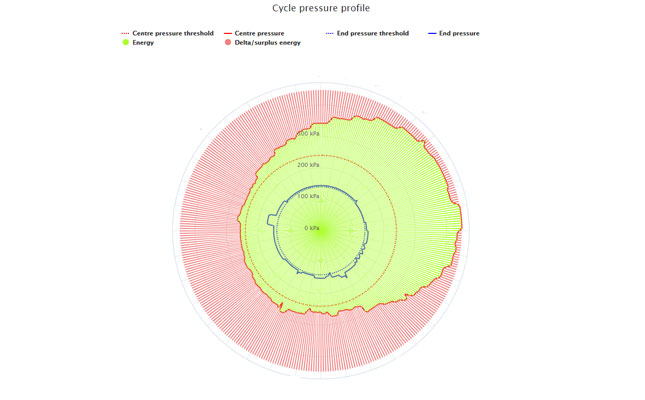
The example shown in Graph 1 of a pivot with a large height difference between the highest and lowest points illustrates how the Agrico system accurately controls the pressure according to the requirement of the pivot.

The graph shows how the Agrico control system responds automatically by varying the inlet pressure at the centre (solid red line) to continuously maintain the required pressure at the end of the pivot (dotted blue line). The actual end pressure is also indicated (solid blue line).

The spray package demands a minimum pressure of 100kPa at the end of the machine for correct, uniform irrigation. Traditionally, an irrigation system is designed with a constant inlet pressure that continuously meets the maximum pressure requirement, which is at the highest point (about 450kPa in this case).

Now, thanks to Agrico’s new GPS system, the pressure at the centre can be varied between 240kPa and 450kPa due to the topography, precisely meeting the varied pressure requirements of the pivot and thus saving energy.

Energy saving
Since the pressure is controlled not to fall below the threshold values and the spray package is equipped with pressure regulators, the volume of water applied is constant, despite the slope. Power (kW) is the product of pressure (kPa) and flow (ℓ/s).

The power required for the pumps during irrigation is therefore directly proportional to the pressure applied.

The total energy for one revolution of the pivot is equivalent to the area under the pressure curve. Graph 2 shows the energy required for one revolution with Agrico’s automatic pressure control, as opposed to the energy that would be required if no control were applied.

The energy required with pressure control (in green) and the 28% energy saving (in red), compared with no control applied.

In this case study, the energy-saving with Agrico’s new GPS pressure control was more than 28%.

Wet conditions delay planting in eastern summer grain region

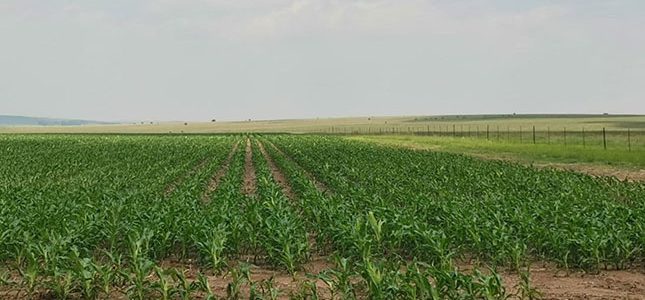
Grain planting in the summer grain production region of South Africa is well underway, with planting in Mpumalanga and KwaZulu-Natal nearing completion, according to Grain SA’s latest production survey.

The survey indicated, however, that in some areas in Mpumalanga and KwaZulu-Natal the planting process had been delayed due to wet conditions.

Conditions in the eastern Free State were generally also very wet, slowing down the planting process, with the soil in areas around Vrede, Warden and Frankfort especially saturated.

According to Grain SA economist, Petru Fourie, planting had systematically started in the western parts of the summer grain region. The optimal planting window for North West and the central parts of the western Free State stretched from mid-November to mid-December.

Some 5% of the hectares earmarked for maize and 20% of the soya bean hectares had been planted by the week of 16 November.

Planting had recently also commenced in the western Free State, but in districts such as Bothaville and Wesselsbron, wet conditions were preventing planting.

In Mpumalanga, 90% of the maize hectares and 70% of the soya bean hectares had been planted. Although planting in KwaZulu-Natal started on 25 October, only 50% of the maize and 40% of the soya bean had been planted to date due to very wet conditions.

According to Johan van den Berg, agricultural meteorologist, earlier planting was especially beneficial in the areas where soil moisture levels were already high.

Indications were that high rainfall could be expected in January and February 2021, and as such more mature maize plants would be able to better manage in the expected very wet conditions.

“Physiologically immature maize fields were in danger of developing diseases such as Diplodia ear rot later in the production season should wet conditions coupled with high temperatures prevail,” he added.

Cobus Olivier, SA Weather Service’s scientist for prediction research, meanwhile said the El Niño-Southern Oscillation (ENSO) was currently in a La Niña state and indications were that it will most likely remain and strengthen towards a strong La Niña state during mid-and late-summer. This meant a high probability of above-normal rainfall in the summer rainfall areas during the summer season.

SA’s top-performing fresh produce: ginger, red peppers, and more

Market trends can be fleeting, and any business would be remiss were it to change direction and invest in fads without a clear idea about the longevity of the public’s interest.

This is especially true of agriculture, where return on investment is often realised years into the future.

Amongst the changes in economic activity seen over the past few months as a result of the coronavirus disease (COVID-19) lockdown has been a noticeable increase in the consumption of fresh produce.

Upon closer inspection, however, it appears that demand for certain fresh produce items has been increasing for quite some time, as consumers re-evaluate their eating habits and make permanent changes.

However, contrary to the laws of supply and demand, which normally see the price of a product going down as supply increases and vice versa, most of the products that have shown the highest price increases have also experienced a surge in production.

Another development worth noting, according to Jaco Oosthuizen, CEO of the RSA Group, is that thanks to improvements in farming operations due to new technology, farmers are now able to provide certain produce year-round.

“This increases demand significantly, because as more products are available, more consumers are including them in their diets on a more regular basis, instead of just
from time to time when the product is available. And because the supply has grown, so has the demand, keeping prices stable, and in some instances increasing them.”

The top five
Asked to list the five products that have experienced the greatest price increases on fresh produce markets since 2015, the RSA Group places ginger at the top, followed by red peppers, blueberries, cauliflower and lettuce.

The trends driving the demand for these specific commodities can be applied to many other fresh produce items, which could also increase in price in due course.

Oosthuizen explains that the growth in these categories can be attributed to a change in consumer behaviour and a greater emphasis on personal well-being.

“This is proved by the probiotic benefits in produce such as ginger, red peppers and blueberries,” he notes. “There’s also an international move towards ‘superfoods’, one of which is blueberries.”

In addition, the Banting diet trend increased the need for carbohydrate replacements such as cauliflower and broccoli. As these vegetables gained popularity among Banting enthusiasts, people who did not follow the diet also tended to buy them more often.

“As more recipes emerge using cauliflower as a rice or pasta replacement, we find the demand increasing,” explains Oosthuizen.

Red peppers
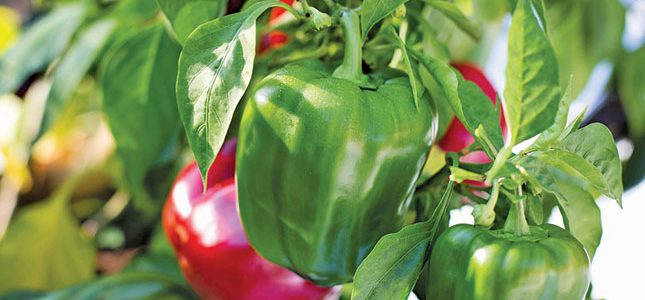
Availability has also played a role in the increase in demand for red peppers. “At one stage, red peppers  were few and far between in a sea of green peppers,” says Oosthuizen.

“Then consumers were introduced to the ‘robot’ pack, with a green, yellow and red pepper. Today, red peppers are far more widely available.”

Lettuce, too, has been in greater demand, which he attributes not only to a healthier lifestyle, but to innovations within the category as well.

“Many varieties of lettuce have emerged over the past few years, from differing colours and leaf shapes to living lettuce that comes with its roots intact and has a longer shelf life as a result,” says Oosthuizen.

“Some of the best lettuce farmers don’t even plant the crop in the ground any more, but farm it undercover in the air, which eliminates the risk of hail and adverse weather, making lettuce available more consistently.”

According to Kandas Cloete, horticultural specialist at the Bureau for Food and Agricultural Policy (BFAP), the prices of sweet pepper and lettuce have increased since 2015, mostly due to high demand and, at times, constrained supply.

“Lettuce and sweet pepper are produced in different parts of the country, where weather conditions allow for different marketing windows throughout the year,” she says.

“In the case of lettuce, as supply has decreased, prices have increased. As supply to the local market has trended downwards, the figures suggest this is driving prices higher.

“Supplies of sweet pepper have been volatile, with noticeably lower volumes in late 2016 and early 2017. However, 2018 and 2019 showed greatly improved volumes, with prices holding firm, suggesting strong demand for the product.”

Cloete also points to avocados and grapes as products that have seen an increase in demand (and price).

“Avocados have a tendency towards an alternate bearing cycle, with a large crop one
year followed by a smaller crop the next year,” she says.

“This causes a variation in volumes available on the local markets, which affects the
price. But the health benefits associated with avocados have had a positive effect on demand, which has increased substantially in recent years, both domestically and on the export market.”

Table grapes
Turning to table grapes, Cloete says that while the industry is primarily export-orientated, a small volume of the crop is sold locally.

“Typically, the first produce of the new season is well received locally, with higher prices than when the season is in full swing and supply is high,” she explains.

“The industry constantly adapts to new consumer tastes and preferences, and producers carefully decide which cultivar to plant when establishing new vineyards. This has led to price increases as consumer satisfaction, and therefore demand, has risen.”

Niche products
While price increases in mass-produced commodities have a major effect on the market, niche products, sold in smaller volumes, are a good indicator of consumer interests.

The BFAP lists dragon fruit, custard apples, peanuts, stir-fry vegetables and red cabbage as the highest-performing niche produce sold on the local fresh produce markets.

A relative newcomer, dragon fruit has been been cultivated commercially in South Africa for only a few years, and has been available locally only since 2017. The novel appearance of the fruit and its superfood status are driving both prices and consumption.

Cherimoya, better known as custard apple, is a subtropical fruit grown locally, with volumes per annum dependent on the flowering time. This is difficult to predict and results in small volumes, but high prices.

Volumes of red cabbage, Cloete notes, have shrunk significantly from 2015, while total revenue has remained fairly constant.

Demand for broccoli, she explains, has been driven by this vegetable’s health benefits, with prices trending upwards while supply has also increased.

She adds that stir-fry vegetables, which are typically offered as a handy, pre-packed assortment, have also increased in popularity and price due to their convenience.

Finding the right marketing strategy
The popularity of a fresh produce item and the consequent price increases depend largely on the consumer’s awareness of the particular product and the repertoire of recipes in which to use it.

Oosthuizen notes that lines of produce that have been branded are seeing some of the largest increases in consumption and price.

“Fresh produce branding is gaining momentum and this, coupled with marketing, plays a big role in increasing value,” he says.

“Branding assists in creating trust in a product and allows the farmer or brand owner to connect with the customer and drive up demand.

“But your brand is only as good as the packaging and contents. Consistency plays
a role in the perceived value, as does the notion of whether a farmer has added value. There’s a place for generic advertising, but people want to connect with the producer.”

Oosthuizen adds that if per capita consumption increases and the product is available year-round, high demand is sure to follow.

It would seem that farmers have been paying attention to fresh produce trends, and producers are chasing more value per square metre.

“But what makes the figures interesting is that a farmer will not necessarily be successful chasing only novelty items with high value,” he adds.

“You need sufficient volumes to tap into the export market, which is where much of the value lies. Overall, it’s still the big lines making money.”

He cautions that, in light of recent market disruptions, farmers also need to be aware of the impact of global disasters or pandemics such as COVID-19.

“So many products came under pressure because they were used predominantly
in the hospitality sector,” he says.

“With those markets closing during the lockdown, sales disappeared overnight.
You need to consider how this type of event will play out in the future.”

Resources to capitalise on trends
Oosthuizen says that it is the larger, well-established farmers who have the cash flow, knowledge and experience to invest in new products and capitalise on trends.

“Spotting a future trend is not easy,” he adds.

“We’ve seen businesses that have been around for several generations being able to cash in on new trends, because they seem to have a better understanding of the industry and years of watching sales go up and down. This kind of knowledge brings with it an ability to see patterns.

“The size of such a business also makes it more feasible to try something new,” notes Oosthuizen.

“Agriculture is a long-term investment. It’s not just a bandwagon you jump on overnight.

“But if one thing is clear, it’s that ‘fresh’ is on the move!”

Email Jaco Oosthuizen at jo@rsa.com, or Kandas Cloete at kandas@bfap.co.za.

Grave concern for condition of Namibia’s FMD-protection fence

A widespread outbreak of foot-and-mouth disease (FMD) in Namibia could potentially wipe out the entire livestock production industry in that country.

Therefore, the condition of Namibia’s veterinary cordon fence was a serious cause for concern.

Following outbreaks of the disease in Kavango East and Kavango West in October, Thinus Pretorius, chairperson of the Namibian Livestock Producers’ Organisation (LPO), told Farmer’s Weekly that the proper management and upkeep of the fence in the north of the country was extremely critical.

He said the fence divided the country into a veterinary buffer zone and a veterinary surveillance zone.

It started at Palgrave Point on the west coast of Namibia and ran in a generally eastern direction to a point on the common border between Namibia and Botswana at a 20˚ latitude.

“This effectively cordons off Angola and the areas of Botswana where the disease is endemic. No cloven-hoofed livestock are under any circumstances allowed to move southwards through the veterinary cordon fence to prevent the spread of diseases such as FMD and lung sickness [contagious bovine pleuropneumonia],” he explained.

At an emergency meeting held earlier this month, the Namibian Meat Board requested the LPO to take responsibility for the repair of the fence following the outbreaks in Kavango.

The board and the government provided the materials, while producers were requested to supply time and labour.

The Grootfontein-Tsumeb-Otavi Regional Agricultural Union immediately started with the repair work.

“We are nevertheless concerned about the general upkeep of the fence and the management thereof. The poor management of the control checkpoints is especially worrying. It is virtually inevitable that the maintenance of the fence will have to be taken over by the private sector and the country’s livestock production sector in particular,” said Pretorius.

He added that the last outbreak of the disease in the disease-free area south of the fence occurred in 1964. Since then the country had built up an animal health status that exceeded any other African country by far.

Should this health status be compromised by outbreaks of FMD, Namibia stood to immediately lose its red meat export markets, including exports to Scandinavian countries, the US and China, as well as the export of beef weaners to South Africa.

Grave concern for condition of Namibia’s FMD-protection fence

A widespread outbreak of foot-and-mouth disease (FMD) in Namibia could potentially wipe out the entire livestock production industry in that country.

Therefore, the condition of Namibia’s veterinary cordon fence was a serious cause for concern.

READ The basics of foot-and-mouth disease

Following outbreaks of the disease in Kavango East and Kavango West in October, Thinus Pretorius, chairperson of the Namibian Livestock Producers’ Organisation (LPO), told Farmer’s Weekly that the proper management and upkeep of the fence in the north of the country was extremely critical.

He said the fence divided the country into a veterinary buffer zone and a veterinary surveillance zone.

It started at Palgrave Point on the west coast of Namibia and ran in a generally eastern direction to a point on the common border between Namibia and Botswana at a 20˚ latitude.

“This effectively cordons off Angola and the areas of Botswana where the disease is endemic. No cloven-hoofed livestock are under any circumstances allowed to move southwards through the veterinary cordon fence to prevent the spread of diseases such as FMD and lung sickness [contagious bovine pleuropneumonia],” he explained.

READ Onderstepoort vaccines target emerging and global markets

At an emergency meeting held earlier this month, the Namibian Meat Board requested the LPO to take responsibility for the repair of the fence following the outbreaks in Kavango.

The board and the government provided the materials, while producers were requested to supply time and labour.

The Grootfontein-Tsumeb-Otavi Regional Agricultural Union immediately started with the repair work.

“We are nevertheless concerned about the general upkeep of the fence and the management thereof. The poor management of the control checkpoints is especially worrying. It is virtually inevitable that the maintenance of the fence will have to be taken over by the private sector and the country’s livestock production sector in particular,” said Pretorius.

He added that the last outbreak of the disease in the disease-free area south of the fence occurred in 1964. Since then the country had built up an animal health status that exceeded any other African country by far.

Should this health status be compromised by outbreaks of FMD, Namibia stood to immediately lose its red meat export markets, including exports to Scandinavian countries, the US and China, as well as the export of beef weaners to South Africa.