Category Archives: Uncategorized

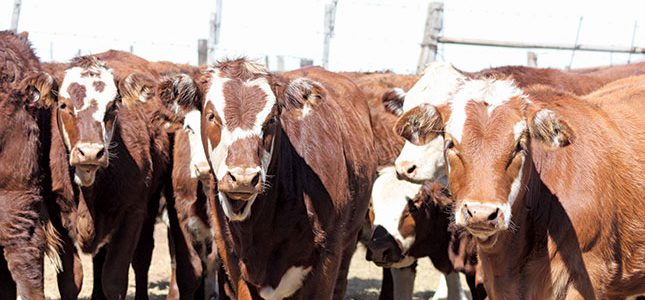
Namibian livestock industry devastated by prolonged drought

Beef cattle sales in Namibia have fallen 31% so far this year compared with the same period in 2019, despite producer price increases of 2% for slaughter cattle and 39% for weaners.

As a result, weaner exports declined 49% between January and August year-on-year, Namibia’s Meat Board reported recently.

READ The role of farmers during the COVID-19 crisis

Weaner calves traditionally constituted 63% of Namibia’s cattle exports. This was ascribed to a decline in supply and an increase in the demand for cattle for slaughter.

The board’s statistics indicated that total sheep sales for this period also decreased 56%, despite producer prices increasing 20%.

Jacque Els, CEO of the Namibian Stud Breeders’ Association, said the decline of the commercial and stud livestock production industries was a result of the relentless droughts the country had been subjected to during the past decade.

READ What livestock farmers should know about climate change

Some stud breeders in the southern parts of the country had lost as much as 90% of their small-stock flocks to date.

The number of stud Swakara sheep in Namibia also declined from between 12 000 and 15 000 five years ago to the current 3 000, while the number of stud cattle declined by 6 000 animals, he added.

“The fact that it rained in some parts of the country does not mean that the effects of the drought have evaporated. It takes a few seasons of good rainfall for the veld to optimally regenerate. The rain [also] does not automatically mean an improvement in cash flow, and does not absolve producers from high levels of production debt caused by the dearth,” Els said.
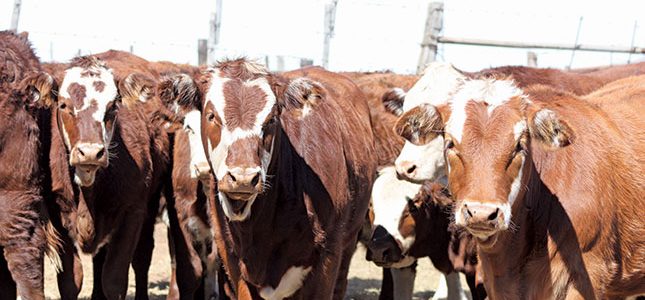
Namibian livestock industry devastated by prolonged drought

Beef cattle sales in Namibia have fallen 31% so far this year compared with the same period in 2019, despite producer price increases of 2% for slaughter cattle and 39% for weaners.

As a result, weaner exports declined 49% between January and August year-on-year, Namibia’s Meat Board reported recently.

READ The role of farmers during the COVID-19 crisis

Weaner calves traditionally constituted 63% of Namibia’s cattle exports. This was ascribed to a decline in supply and an increase in the demand for cattle for slaughter.

The board’s statistics indicated that total sheep sales for this period also decreased 56%, despite producer prices increasing 20%.

Jacque Els, CEO of the Namibian Stud Breeders’ Association, said the decline of the commercial and stud livestock production industries was a result of the relentless droughts the country had been subjected to during the past decade.

READ What livestock farmers should know about climate change

Some stud breeders in the southern parts of the country had lost as much as 90% of their small-stock flocks to date.

The number of stud Swakara sheep in Namibia also declined from between 12 000 and 15 000 five years ago to the current 3 000, while the number of stud cattle declined by 6 000 animals, he added.

“The fact that it rained in some parts of the country does not mean that the effects of the drought have evaporated. It takes a few seasons of good rainfall for the veld to optimally regenerate. The rain [also] does not automatically mean an improvement in cash flow, and does not absolve producers from high levels of production debt caused by the dearth,” Els said.

R30 million in grazing lost to wildfires in Namibia

A devastating wildfire that raged on 11 farms in the Otjiwarongo district, in the northern part of Namibia late last month, destroyed 30 000ha of grazing over a period of three days.

Namibian agriculturalist at AgriConsult, Dr Axel Rothauge, has calculated that the damage amounted to about R30 million.

Rothauge calculated the damage based on the cost of the grazing used as fodder for beef cattle. This was based on the average daily grass intake of a head of cattle to achieve a growth rate of 500g/day.

He also included the value of the per hectare grass production in the Otjiwarongo area. Otjiwarongo is the capital of the Otjozondjupa region of Namibia.

The cost of the grazing needed for 500g daily growth was determined at 50c/kg.

“Beef cattle consume about 13,5kg of dry grass per day at R6,75 daily. The value of the grass cover in Otjiwarongo works out at R1 000/ha, based on a grass cover of 2t/ha,” he explained.

According to Rothauge, the 30 000ha lost in the wildfires would have supplied enough feed for 6 000 beef cattle for nine months. Early and good rainfall was needed for the regeneration of grazing in the burnt areas.

It was vital that the affected camps were left fallow until the end of the Namibian summer rainfall season at the end of May 2021, to ensure optimum veld generation.

R30 million in grazing lost to wildfires in Namibia

A devastating wildfire that raged on 11 farms in the Otjiwarongo district, in the northern part of Namibia late last month, destroyed 30 000ha of grazing over a period of three days.

Namibian agriculturalist at AgriConsult, Dr Axel Rothauge, has calculated that the damage amounted to about R30 million.

Rothauge calculated the damage based on the cost of the grazing used as fodder for beef cattle. This was based on the average daily grass intake of a head of cattle to achieve a growth rate of 500g/day.

He also included the value of the per hectare grass production in the Otjiwarongo area. Otjiwarongo is the capital of the Otjozondjupa region of Namibia.

The cost of the grazing needed for 500g daily growth was determined at 50c/kg.

“Beef cattle consume about 13,5kg of dry grass per day at R6,75 daily. The value of the grass cover in Otjiwarongo works out at R1 000/ha, based on a grass cover of 2t/ha,” he explained.

According to Rothauge, the 30 000ha lost in the wildfires would have supplied enough feed for 6 000 beef cattle for nine months. Early and good rainfall was needed for the regeneration of grazing in the burnt areas.

It was vital that the affected camps were left fallow until the end of the Namibian summer rainfall season at the end of May 2021, to ensure optimum veld generation.

Mycotoxins in water may have caused Botswana elephant deaths

No definitive answers have yet been found for the mass die-off of elephants in Botswana since May this year.

Early research results have suggested, however, that the deaths could be attributed to a naturally occurring toxin.

READ A step-by-step guide to intensive bushbuck breeding

This emerged in a recent investigative paper published in the African Journal for Wildlife Research by a team of researchers from South Africa and Pakistan, who aimed to gain an understanding of the cause of death of more than 350 elephants in that country.

Dr Gerhard Verdoorn, CropLife SA’s operations and stewardship manager, told Farmer’s Weekly it was highly likely that the deaths were caused by mycotoxins from infected water sources.

The mycotoxins severely affected the neurological system, resulting in rapid death. This could explain why some of the elephants collapsed mid-stride and caved in on their knees.

Carcasses were first found in the Okavango Panhandle region, and blood samples had since been tested by scientists in Zimbabwe, the US, and at the University of Pretoria’s Faculty of Veterinary Science in South Africa.

READ Preventing aflatoxin poisoning

In the paper, the team observed that the death of the elephants in Botswana “was indiscriminate in line with their age and gender, while death for some was sudden, as elephants were found collapsed forward onto their chests, tusks in the ground, rather than on their sides.

Viral and bacterial agents that could precipitate species-specific mortalities on this scale, potential environmental sources of poisoning, and the samples and tests that would assist in excluding/confirming these candidate causes were considered”.

READ Latest research: Macadamias need less water than you think!

Botswana’s elephant population of 130 000 had been stable for the past 25 years.

Considering that yearly mortalities of between 3 000 and 4 000 individuals should be associated with this stable population size, the writers argued that the loss of some 400 elephants was unlikely to negatively impact the broader elephant population.

Their concern was, however, that the current wave of elephant mortalities would continue and spread to other areas.

A second consideration was that a similar mass mortality event would affect small and isolated elephant populations, which would not be able to withstand the loss of so many individuals, the paper said.

Mycotoxins in water may have caused Botswana elephant deaths

No definitive answers have yet been found for the mass die-off of elephants in Botswana since May this year.

Early research results have suggested, however, that the deaths could be attributed to a naturally occurring toxin.

READ A step-by-step guide to intensive bushbuck breeding

This emerged in a recent investigative paper published in the African Journal for Wildlife Research by a team of researchers from South Africa and Pakistan, who aimed to gain an understanding of the cause of death of more than 350 elephants in that country.

Dr Gerhard Verdoorn, CropLife SA’s operations and stewardship manager, told Farmer’s Weekly it was highly likely that the deaths were caused by mycotoxins from infected water sources.

The mycotoxins severely affected the neurological system, resulting in rapid death. This could explain why some of the elephants collapsed mid-stride and caved in on their knees.

Carcasses were first found in the Okavango Panhandle region, and blood samples had since been tested by scientists in Zimbabwe, the US, and at the University of Pretoria’s Faculty of Veterinary Science in South Africa.

READ Preventing aflatoxin poisoning

In the paper, the team observed that the death of the elephants in Botswana “was indiscriminate in line with their age and gender, while death for some was sudden, as elephants were found collapsed forward onto their chests, tusks in the ground, rather than on their sides.

Viral and bacterial agents that could precipitate species-specific mortalities on this scale, potential environmental sources of poisoning, and the samples and tests that would assist in excluding/confirming these candidate causes were considered”.

READ Latest research: Macadamias need less water than you think!

Botswana’s elephant population of 130 000 had been stable for the past 25 years.

Considering that yearly mortalities of between 3 000 and 4 000 individuals should be associated with this stable population size, the writers argued that the loss of some 400 elephants was unlikely to negatively impact the broader elephant population.

Their concern was, however, that the current wave of elephant mortalities would continue and spread to other areas.

A second consideration was that a similar mass mortality event would affect small and isolated elephant populations, which would not be able to withstand the loss of so many individuals, the paper said.

COVID-19 ‘perfect storm’ for African food security

COVID-19’s arrival in Africa has exacerbated pre-existing major challenges to the continent’s food production and nutrition security.

These include droughts, floods, extreme temperatures, outbreaks of crop and livestock pests and diseases, and generally low economic growth.

READ Fresh herb demand falters as COVID-19 shuts restaurants

This was according to the Minister of Agriculture, Land Reform and Rural Development, Thoko Didiza, during her presentation to the recent joint virtual meeting of African ministers responsible for agriculture, trade and finance. The meeting was hosted by the African Union Commission (AUC).

“The advent of COVID-19 has […] created a perfect storm, which requires meticulous attention to detail in addressing its impact on food security and nutrition. We should, while dealing with the immediate challenges visited upon us by COVID-19, also appreciate the window of opportunity that COVID-19 has provided for us to reimagine, reset and reposition our agriculture post this disaster,” Didiza said.

The Minister of Trade, Industry and Competition, Ebrahim Patel, also participated in the meeting, calling on greater efforts towards building economic resilience across the continent from Africa’s leaders.

READ Game reserve turns to meat sales amid COVID-19 tourism ban

This included investing in Africa’s agricultural and industrial capabilities, and in trade and supply chains between its countries.

“African countries are learning the hard lesson that we cannot simply remain exporters of raw materials and importers of medical supplies and food products. Our continent imported US$66 billion [approximately R1,14 trillion] [of] agricultural products in 2019 [… and …] runs an agricultural trade deficit with the rest of the world of some US$22 billion [R380 billion],” Patel said.

According to the Organisation for Economic Co-operation and Development and the Food and Agriculture Organization of the United Nations’ report, ‘Agricultural Outlook 2020-2029’, sub-Saharan Africa’s trade deficit in major food items was anticipated to widen over the next 10 years.

Evaluated at constant (2004/2006) global reference prices, the deficit was anticipated to grow from about US$18 billion (R298 billion) to US$31 billion (R514 billion) by 2029, the report said.

This was a result of the fact that import volumes of cereals, meat, sugar and oils were rising, and apart from sugar, imports to the region of nearly all main commodities were growing at a faster rate than the production or exports.

Some of the interventions Didiza suggested, to help address the threats to Africa’s food and nutrition security included accurately assessing COVID-19’s impact on food and nutrition security, livelihoods and food systems in the African Union’s member states; meeting the immediate food needs of the continent’s vulnerable populations; helping Africa’s smallholder farmers increase their productivity and market access; and establishing adequate emergency strategic food reserves and storage facilities.

COVID-19 ‘perfect storm’ for African food security

COVID-19’s arrival in Africa has exacerbated pre-existing major challenges to the continent’s food production and nutrition security.

These include droughts, floods, extreme temperatures, outbreaks of crop and livestock pests and diseases, and generally low economic growth.

READ Fresh herb demand falters as COVID-19 shuts restaurants

This was according to the Minister of Agriculture, Land Reform and Rural Development, Thoko Didiza, during her presentation to the recent joint virtual meeting of African ministers responsible for agriculture, trade and finance. The meeting was hosted by the African Union Commission (AUC).

“The advent of COVID-19 has […] created a perfect storm, which requires meticulous attention to detail in addressing its impact on food security and nutrition. We should, while dealing with the immediate challenges visited upon us by COVID-19, also appreciate the window of opportunity that COVID-19 has provided for us to reimagine, reset and reposition our agriculture post this disaster,” Didiza said.

The Minister of Trade, Industry and Competition, Ebrahim Patel, also participated in the meeting, calling on greater efforts towards building economic resilience across the continent from Africa’s leaders.

READ Game reserve turns to meat sales amid COVID-19 tourism ban

This included investing in Africa’s agricultural and industrial capabilities, and in trade and supply chains between its countries.

“African countries are learning the hard lesson that we cannot simply remain exporters of raw materials and importers of medical supplies and food products. Our continent imported US$66 billion [approximately R1,14 trillion] [of] agricultural products in 2019 [… and …] runs an agricultural trade deficit with the rest of the world of some US$22 billion [R380 billion],” Patel said.

According to the Organisation for Economic Co-operation and Development and the Food and Agriculture Organization of the United Nations’ report, ‘Agricultural Outlook 2020-2029’, sub-Saharan Africa’s trade deficit in major food items was anticipated to widen over the next 10 years.

Evaluated at constant (2004/2006) global reference prices, the deficit was anticipated to grow from about US$18 billion (R298 billion) to US$31 billion (R514 billion) by 2029, the report said.

This was a result of the fact that import volumes of cereals, meat, sugar and oils were rising, and apart from sugar, imports to the region of nearly all main commodities were growing at a faster rate than the production or exports.

Some of the interventions Didiza suggested, to help address the threats to Africa’s food and nutrition security included accurately assessing COVID-19’s impact on food and nutrition security, livelihoods and food systems in the African Union’s member states; meeting the immediate food needs of the continent’s vulnerable populations; helping Africa’s smallholder farmers increase their productivity and market access; and establishing adequate emergency strategic food reserves and storage facilities.

Namibian farmers harvest country’s first blueberry crop

The first-ever commercial harvest of blueberries in Namibia recently commenced on the banks of the Okavango River between Mashare and Mupapama villages in Kavango East, northern Namibia.

The 20ha project was considered a forerunner for other high-value crops that could be produced under irrigation in the semi-arid country, according to Willem Mostert, manager of Cherry Irrigation: Namibia, the company in charge of the irrigation and fertigation management system for the project.

READ Four niche crops to boost your cash flow

“A few years ago, no one could have dreamed that it was possible to grow high-quality products such as blueberries in a country as dry as this. We already produce a variety of grains and vegetables, including wheat, maize, sorghum, potatoes, onions and cauliflower in the region, and avocado production is next on the list. We plan to start planting the first trees on 1,5ha in September,” said Mostert.

Roelie Venter, CEO of the Namibia Agricultural Union, said if more high-value agricultural products were produced in the country, it would become less dependent on imports.

READ Plum production: an overview

Labour-intensive initiatives, such as blueberry production, would also increase job opportunities, as well as open valuable opportunities to earn foreign currency.

This season’s blueberry crop was being marketed locally, and exports were set to commence in August to Europe, Asia and the Indian Ocean islands, including Mauritius, the Maldives and the Seychelles.

Albert Basson, Mashare project director, said the 2020 harvest was expected to continue into late October.

“We’re projecting an ultimate yield of up to 150t this season, and we plan to double the area under production by the end of 2021,” he added.

Namibian farmers harvest country’s first blueberry crop

The first-ever commercial harvest of blueberries in Namibia recently commenced on the banks of the Okavango River between Mashare and Mupapama villages in Kavango East, northern Namibia.

The 20ha project was considered a forerunner for other high-value crops that could be produced under irrigation in the semi-arid country, according to Willem Mostert, manager of Cherry Irrigation: Namibia, the company in charge of the irrigation and fertigation management system for the project.

READ Four niche crops to boost your cash flow

“A few years ago, no one could have dreamed that it was possible to grow high-quality products such as blueberries in a country as dry as this. We already produce a variety of grains and vegetables, including wheat, maize, sorghum, potatoes, onions and cauliflower in the region, and avocado production is next on the list. We plan to start planting the first trees on 1,5ha in September,” said Mostert.

Roelie Venter, CEO of the Namibia Agricultural Union, said if more high-value agricultural products were produced in the country, it would become less dependent on imports.

READ Plum production: an overview

Labour-intensive initiatives, such as blueberry production, would also increase job opportunities, as well as open valuable opportunities to earn foreign currency.

This season’s blueberry crop was being marketed locally, and exports were set to commence in August to Europe, Asia and the Indian Ocean islands, including Mauritius, the Maldives and the Seychelles.

Albert Basson, Mashare project director, said the 2020 harvest was expected to continue into late October.

“We’re projecting an ultimate yield of up to 150t this season, and we plan to double the area under production by the end of 2021,” he added.