Category Archives: Uncategorized

Big boost for Rwandan poultry production

Rwanda imports approximately 150 000 day-old chicks per month from countries such as the Netherlands, Belgium and Uganda, according to Rwanda’s Ministry of Agriculture.

AgDevCo’s investment will allow Uzima Chicken, sponsored by a US-based investor, Flow Equity (which has a similar business model in Ethiopia), to produce between eight million and 10 million chicks a year.

This will in effect significantly reduce the country’s dependence on chick imports.

Chris Isaac, regional director of AgDevCo, said: “We believe Uzima Chicken can transform the poultry market in Rwanda by delivering improved birds to hundreds of thousands of households.

We have seen the model’s success in Ethiopia and are confident that, with continuing support from the Ministry of Agriculture, Uzima Chicken is well-placed to replicate that success in Rwanda.”

Uzima plans to sell day-old chicks through a network of independent distributors, who will rear the birds until they are four weeks old before selling them to smallholder farmers.

The SASSA dual breed will be produced, as it is ideal for rearing outdoors in backyard conditions, gains weight quicker than local chickens, and is three to four times more productive at laying eggs, according to the statement.

The initiative forms part of a greater plan by the Ugandan government to reduce its dependence on chick imports from other countries. In August 2016, Flow Equity secured a 25-year contract for Uganda’s 2,3 billion RWF National Hatchery, Rubirizi, at 750 million RWF per year.

Privatisation of the hatchery resulted in production increasing from 10 000 to 80 000 day-old chicks per month. The government also allocated 15ha of land in Bugersera District to the company to facilitate expansions.

The supply of day-old chicks from Rwanda’s hatcheries has increased 23% from 399 000 in 2010 to 912 000 in 2015, with Rwanda Chick representing 74% of national production.

Mozambique poultry industry gets a boost from SA

A partnership between South Africa’s Philafrica Foods and Mozambique’s Novos Horizontes aimed to improve chicken production and supply in the coastal country.

Philafrica invested especially in locally sourced raw materials, while Novos Horizontes had provided inputs on credit to 250 smallholder broiler outgrowers, from which it purchased full-grown birds for slaughtering, processing, and marketing.

But, according to company’s website, production challenges had reduced smallholder numbers to 130.

Philafrica CEO, Roland Decorvet, said that currently 60% to 70% of Mozambique’s poultry demand had to be imported due to lack of local production.

“We see immense potential to replace imported [poultry] products with local production and are pleased to have found a strong operating partner in Mozambique with [nearly two] decades of experience in the poultry value-chain,” he said.

Andrew Cunningham, Novos Horizontes’ executive chairperson, said that with Philafrica’s support his company could continue working towards becoming Mozambique’s “premier poultry producer”.

Novos also wanted to expand into other value chains, where agro-industrial processing and building companies could pull production from Mozambique’s smallholder farmers.

A statement from Philafrica said it planned to invest between R1 billion to R1,5 billion in food categories across Africa over the next 18 to 24 months.

SA company aims to improve Mozambican chicken production

The partnership is the first for Philafrica, a subsidiary of SA’s AFGRI Group, which focuses on investing in food categories across Africa, as well as on locally-sourced raw materials.

Founded in 2005, Novos Horizontes was working to unlock Mozambique’s agricultural potential by supporting smallholder farmers.

Novos Horizontes initially had 250 smallholder broiler outgrowers to which it supplied necessary inputs on credit and from which it purchased full-grown birds for slaughtering, processing and marketing.

According to the company’s website, this number had decreased to around 130 smallholder farmers as a result of production challenges.

Andrew Cunningham, executive chairperson of Novos Horizontes, said that with Philafrica’s support, the company could continue with its aim of becoming Mozambique’s “premier poultry producer”.

It also wanted to expand into other value chains where agro-industrial processing and building brands could buy production from Mozambique’s smallholder farmers.

“We are excited by the potential of this investment and partnership to enhance our vision to unlock potential in Mozambique,” said Cunningham.

A statement by Philafrica said that it planned to invest R1 billion to R1,5 billion in food categories across Africa over the next 18 to 24 months.

Philafrica’s CEO, Roland Decorvet, said that currently 60% to 70% of Mozambique’s poultry consumption needs had to be imported due to a lack of local production.

“We see immense potential to replace imported [poultry] products with local production and are pleased to have found a strong operating partner in Mozambique with [nearly two] decades of experience in the poultry value chain,” he said.

Decorvet added, “Moreover, our expertise in rendering, feed mixing and poultry will drive substantial synergies as [Novos Horizontes] expands in Mozambique.”

Information on Novos Horizontes’ website revealed that in 2016, the company sourced and processed 3 321t of frozen chicken, hatched and supplied 6,3 million day-old broiler chicks, and manufactured 19 995t of poultry feed.

EU commits $7 million to agri development in Zimbabwe

The European Union (EU) has set aside $7 million (R96 million) for proposals for a project that would strengthen the agriculture value chain in Zimbabwe.

The funding was included in the 11th European Development Fund and National Indicative Plan, signed by the European Union and Zimbabwe in February 2015.

In implementing the plan the European Union had allocated $50 million (€40 million, R640 million) up until 2020, towards developing the country’s agricultural sector.

Agricultural production in Zimbabwe had slowed since 2000, following its land reform programme, and subsequent farm seizures.

While the EU did not mention the cause of deterioration, it stated in a press release that service provision in the country’s agricultural sector had become ineffective and inefficient.

In the statement, it said: “It is critical to re-think and re-define relevant, farmer-centric and value-chain oriented services and to develop a robust framework for their sustainable, effective, and efficient delivery.”

The EU had provided over $1 billion (€R2 billion, R 13 726 600 000) in development assistance to Zimbabwe since 2009, to support social services and food security, reinforce democratic institutions, and assist in economic recovery.

Since then, it had been estimated that the funding had helped improve sustainability and productivity on roughly 700 000 small-scale farms, with positive spin-offs for food security.

The deadline for proposals is Tuesday 14 November. More information about the call for proposals can be viewed here webgate.ec.europa.eu

Disease identification app to boost food security in Africa

The international team comprises scientists from the International Institute of Tropical Agriculture (IITA) in Nigeria, Pennsylvania State University in the US, the International Centre for Tropical Agriculture in Colombia, the International Potato Centre in Peru, and Bioversity International, headquartered in Italy.

The grant forms part of the Consultative Group on International Agricultural Research (CGIAR) Platform for Big Data Agriculture ‘Inspire Challenges’ programme.

It was presented at the Big Data in Agriculture Convention held recently in Colombia.

According to IITA’s James Legg, one of the leaders of the project, the team generated more than 200 000 images of diseased cassava crops in coastal Tanzania and farms in western Kenya, in order to develop an artificial intelligence algorithm that can automatically classify five cassava diseases.

The app is being field-tested in Tanzania.

The team is also developing a mobile spectrophotometer that diagnoses different viral diseases, even in healthy looking plants.

“Smallholders or extension officers will be able to download the app for free, fire it up, point it at a leaf with disease symptoms, and get an instant diagnosis,” Legg said.

In addition to providing disease identification, the app will supply users with the latest management advice and pinpoint the location of the nearest agricultural extension support should a user need more assistance.

In addition, information gathered through the app will be used to send SMS alerts to farmers about potential disease and pest threats in their areas.

The team is keen to expand their work across numerous sites in Africa and a number of crops that are critical for food security, according to David Hughes, associate professor at Pennsylvania State University, who leads the project with Leggs.

By doing this, Hughes believes that the team can amplify the impact of their work a hundred times.

Boost for East African wheat production

The measures include the subsidising wheat production through a special fund, based on production levels, and opening a commercial bank to give farmers access to loans at low interest rates.

Funding for the subsidy will come from a 2% levy on all exports, while the bank will be funded with a 10% levy paid on imported wheat. A scheme will also be introduced, either through national cereal boards or commodities exchange to:

  • Guarantee markets and prices for locally produced wheat;
  • Initiate research to determine appropriate wheat varieties to be grown;
  • Determine quality preferences of millers;
  • Develop production practices that will help boost production efficiencies and profitability, thereby attracting more investments for wheat production.

According a USDA grain report released earlier this year, Kenya had produced between 380 000t and 450 000t of wheat per year over the past three years. Total consumption had, however, increased from 1,95 million tons to 2,06 million tons per year due to changing dietary preferences. The area under production, however, remained static at approximately 170 00 ha.

In Tanzania, the area under production and yields had remained relatively stable over the past three years at about 100 00 ha and 100 000t/year. However, total consumption in that country increased from 990 000t to 1,95 million tons over the same period.

According to the USDA report, less than 1% of farmers grow wheat in Tanzania and 32% of this wheat is exported, while 91% of the wheat consumed is imported.

One of the objectives of the new initiative is to encourage millers to source wheat locally before importing supplies from beyond the region, to which milling companies in the two countries agreed at the meeting.

Progress on the implementation of these measures will be reviewed at a meeting in Mombasa, Kenya scheduled for November.

Zimababwe hosts 6th Stockmanschool

The Zimbabwe Stockmanschool will run for the sixth time this year at Ant Farms, a cattle farm, outside Harare.

The stockmanschools have theoretical sessions on beef production. Mark Hayters is pictured here.
Photo: Supplied

The topic for this year is the participation in the red meat value chain through improved precision management practices.

International speakers will include amongst others be Namibian mega beef farmer Mecki Schneider, who will talk about the participation in the meat value chain through improved precision practices, and USA farmer Don Schiefelbein, from Schiefelbein farms, who will talk on the American livestock industry, and its economic and development outlook.

Speaking to Farmer’s Weekly Mark Hayters, who coordinates the school, said the school was run by the Zimbabwean Herdbook and the Livestock Identification Trust.

“Both commercial and communal Zimbabwean beef producers take part in the school and this provides stability in the Zimbabwean livestock sector,” Michael Bradfield, coordinator for the South African Aldam Stockmanschool, that runs in conjunction to the Zimbabwean school, said to Farmer’s Weekly.

Between 60 – 80 farmers attended the school annually and the Zimbabwean Brahman, Tuli adn Boran societies were well represented at the school.

The two day school runs theoretical sessions on cattle production and has a main topic that drives it every year.

The Zimbabwean Department of Livestock and Production had close links to the school.

The school runs from 24 – 25 October and costs USD200 (About R2600+). Contact Mark Hayters [email protected] +263 9122 86828

Botswana reports suspected foot-and-mouth outbreak

Botswana recently reported a suspected outbreak of foot-and-mouth disease (FMD) in Ngamiland to the World Organisation for Animal Health.

On Tuesday (19 September), Botswanan veterinary services were asked to investigate cattle that demonstrated symptoms of the disease.

The cattle were discovered in a communal grazing area near Sehithwa Village. Samples for testing were collected, but results were still pending.

The source of the outbreak was unknown.

Thus far, five animals have shown symptoms of FMD, while another 343 head of cattle has been identified as being susceptible. Movement restrictions had been implemented to prevent the spread of the disease.

At the North West District Council, Botswana’s Minister of the Department of Agriculture, Patrick Ralotsia, reportedly said that all abattoirs would be temporarily shut, and that no movement of meat, or the slaughter of cattle, would be allowed until investigations were completed.

Meanwhile, some people in the country blamed the government for the outbreak, saying that veterinary cordon fences had been neglected over the past few years, and that there was a shortage of FMD drugs.

Earlier this month, the government had donated 473 200 doses of FMD vaccines to neighbouring country, Zimbabwe, to prevent the spread of the disease across the border.

Lesotho grants SA company medicinal marijuana growers licence

Lesotho has granted one of its first licences for the production of medical marijuana to South African company, Verve Dynamics. The company has a branch in Lesotho.

Verve Dynamics, a vegan-friendly manufacturer of highly-purified botanical extracts has been granted a licence for the legal production of cannabis.
Photo: Jennifer Martin

Tony Budden, managing director of Hemporium, a South African-based company that produces clothing, accessories and cosmetics from hemp, told Farmer’s Weekly that he could confirm that Verve Dynamics, and a number of other companies, had been granted licences for the legal production of cannabis.

“I believe this may put pressure on the South African government. We have been researching hemp production for 21 years and could have been a world leader in production, but we are only now looking at viable pilot projects,” he said.

Budden said he assumed that the crop would be exported to countries such as Canada, where the use of cannabis for medicinal purposes was legal.

According to its website, Verve Dynamics is a vegan-friendly manufacturer of highly-purified botanical extracts. The company could not be reached for comment by time of publication.

New fresh produce market set to boost Nigerian agri sector

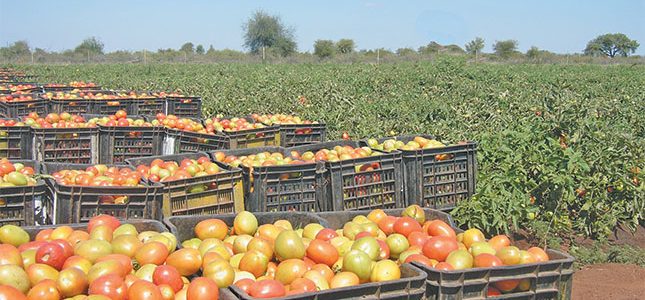
An agricultural commodities market is being set up near Benin City in Nigeria, as part of the Nigerian government’s efforts to resuscitate the farming industry and reduce the country’s reliance on the struggling oil industry.

In an interview with CNBC Africa, Pat Utomi, CEO of Integrated Produce City, said the US$135 million development will not only allow farmers to sell their produce via market agents, but the centre will also link them to wholesalers, industrial users, and even exporters.

The latter would help to ensure that products conform to the strict requirements of export markets, and as such prevent the high level of rejection of produce suffered by many aspiring export farmers.

It is also envisaged that wastage would be significantly reduces as producers would have access to cooling and drying facilities. Utomi estimated that this in itself had the potential to boost farmers’ earnings by about 30%.

The market would also offer extension services to farmers and facilitate access to farming inputs.

In addition, it is envisaged that food processing facilities would be located at the facility where value could be added to produce, which would also reduce the cost of logistics.

The Integrated Produce City is funded by investors from South Africa, Italy, China and India, among others, and it is set to open for business in October 2018.